RNA purification is the foundation of virtually every downstream molecular biology application — from RT-qPCR and NGS library prep to in vitro transcription (IVT) for mRNA therapeutics. Yet despite decades of protocol refinement, RNA purification remains one of the most failure-prone steps in the workflow. A single trace of genomic DNA, a stray RNase, or an inconsistent bead ratio can compromise results that took days or weeks to generate.
This guide walks through why RNA purification matters, the main methods available today, the factors that determine success, and how to choose the right approach for your application.
Why RNA Purification Matters
RNA is inherently less stable than DNA. Its 2′-hydroxyl group makes the phosphodiester backbone susceptible to both chemical hydrolysis and enzymatic degradation, and ubiquitous environmental RNases can degrade an unprotected sample in minutes. On top of that, most biological samples contain a complex mixture of proteins, lipids, genomic DNA, and metabolites that can inhibit downstream enzymatic reactions if not adequately removed.
The consequences of poor RNA purification show up downstream in predictable ways:
- RT-qPCR: inconsistent Ct values, poor amplification efficiency, or false negatives caused by residual inhibitors
- NGS library prep: reduced library complexity, adapter dimer artifacts, or skewed transcript representation
- IVT-mRNA production: reduced transcription yield or contamination that complicates downstream capping and tailing reactions
In short, the quality of your RNA purification directly caps the quality of everything that follows.
Main RNA Purification Methods
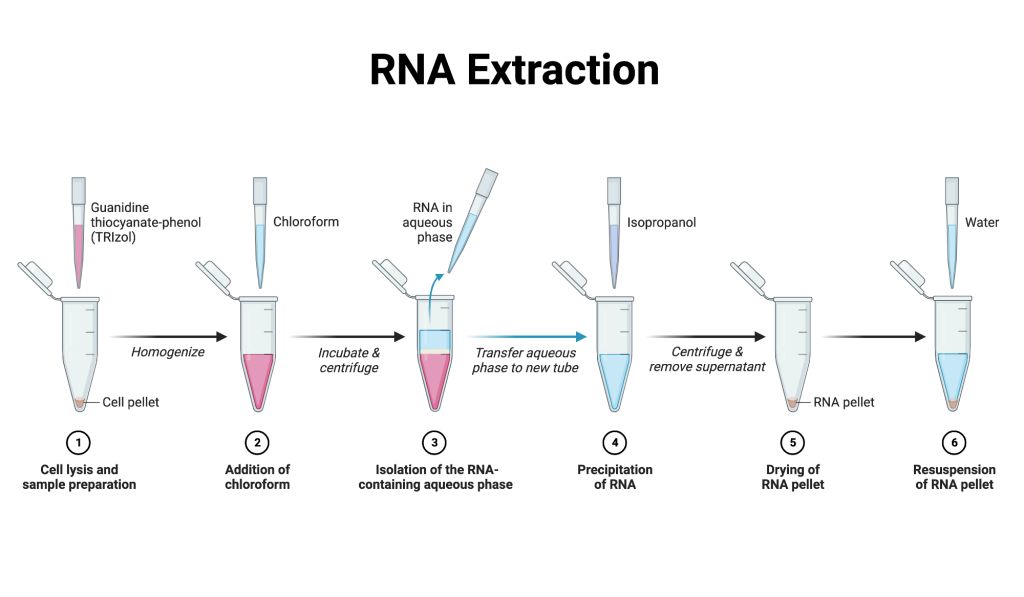
Organic Extraction (Phenol-Chloroform / TRIzol-Type Methods)
Organic extraction methods rely on differential solubility: a phenol-chloroform mixture separates RNA into the aqueous phase while proteins and DNA partition into the interphase and organic phase. This approach remains a gold standard for total RNA yield and is often preferred when maximum RNA recovery from difficult sample types (fibrous tissue, plant material) is the priority.
Trade-offs: labor-intensive, involves hazardous organic solvents, difficult to automate, and prone to genomic DNA carryover unless combined with a DNase treatment step.
Silica Column-Based Purification
Column-based kits use a chaotropic salt to denature proteins and promote RNA binding to a silica membrane, followed by washing and elution steps. This method largely displaced organic extraction for routine lab use because it is faster, safer, and more reproducible.
Trade-offs: binding capacity is limited by column size, and larger sample volumes or high-throughput workflows can become bottlenecked by individual spin-column handling.
Magnetic Bead-Based Purification
Magnetic bead methods use silica- or carboxyl-functionalized beads that bind RNA under high-salt conditions and release it under low-salt elution conditions. Because beads are manipulated with a magnetic stand rather than centrifugation, this method scales naturally to 96-well or 384-well plate formats and integrates directly with liquid handling robots.
Trade-offs: reagent cost per sample can be higher than column methods at small scale, though this is typically offset by throughput gains in automated settings.
What Determines RNA Purification Success
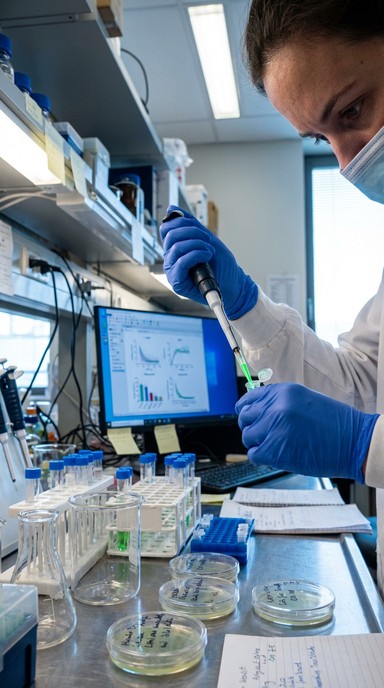
Regardless of which method you choose, a few variables consistently determine whether a purification succeeds or fails:
RNase contamination control. RNases are extraordinarily stable and difficult to fully inactivate once introduced. Using RNase-free consumables, dedicated pipettes, and including an RNase inhibitor in downstream reaction setup are standard safeguards — particularly in applications like real-time RT-PCR where high concentrations of reducing agents like DTT cannot be used, making inhibitor stability at low DTT levels a meaningful consideration.
Genomic DNA removal. Even trace genomic DNA can produce false-positive signals in RT-qPCR or skew NGS read mapping. A DNase I treatment step — ideally followed by clean inactivation that doesn’t require phenol extraction — is considered standard practice for RNA intended for sensitive downstream quantification.
Sample lysis efficiency. Incomplete lysis is one of the most common (and least discussed) causes of poor RNA yield, particularly with fibrous or densely cellular tissue. Lysis buffer chemistry and mechanical disruption method should be matched to sample type.
Elution volume and buffer. Over-diluting RNA during elution to chase a lower Ct value trade-off, or using a buffer that isn’t compatible with your downstream enzyme, can undermine an otherwise clean purification.
Choosing the Right Approach
| Consideration | Organic Extraction | Column-Based | Magnetic Bead-Based |
|---|---|---|---|
| Sample throughput | Low | Medium | High (automatable) |
| Total RNA yield | High | Medium-High | Medium-High |
| Hands-on time | High | Medium | Low (with automation) |
| Best suited for | Difficult tissue, max yield | Routine lab use, moderate throughput | High-throughput / automated pipelines |
For labs running occasional, low-volume extractions from challenging sample types, organic extraction or column-based kits remain practical choices. For labs scaling toward automated, high-throughput RNA processing — including mRNA manufacturing pipelines — magnetic bead-based methods are increasingly the default, given their compatibility with liquid handlers and plate-based workflows.
Final Thoughts
There is no single “best” RNA purification method — only the method best matched to your sample type, throughput needs, and downstream application. What stays constant across every method is the need to control RNase contamination, remove genomic DNA effectively, and validate that your elution conditions are compatible with what comes next.
In our next post, we’ll walk through a detailed, step-by-step RNA purification protocol, including common pitfalls and how to troubleshoot low yield or poor downstream performance.