Product Overview
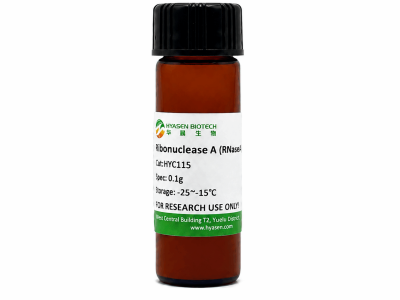
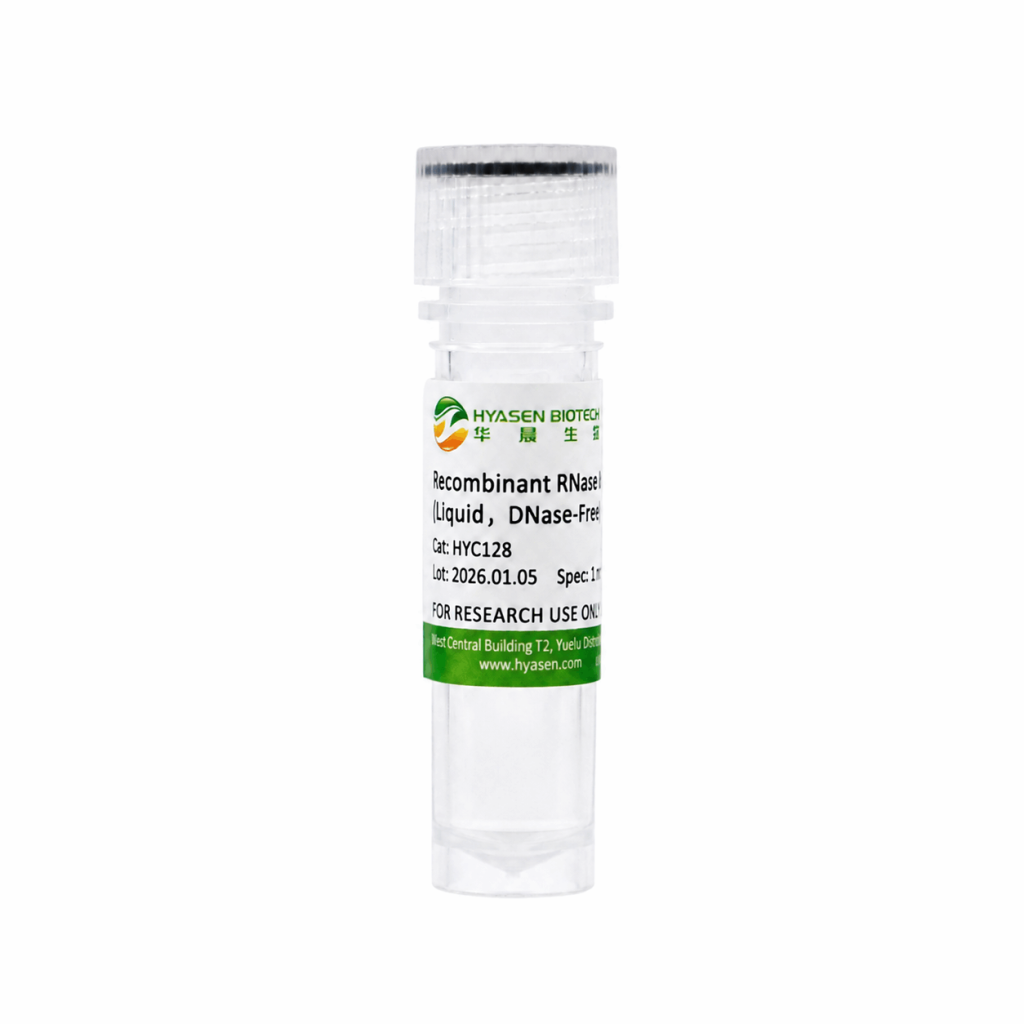
Recombinant RNase A (Liquid, DNase-Free) is a protein-engineered, non-specific endoribonuclease developed based on bovine pancreatic RNase A. It is produced through recombinant expression in a yeast-based system, followed by purification, rather than direct extraction from bovine pancreatic tissue. This animal-origin-free recombinant production approach ensures consistent product quality while eliminating the risks associated with animal tissue-derived enzyme extraction. The yeast expression system also avoids bacterial endotoxins associated with prokaryotic expression hosts.
The enzyme specifically cleaves RNA at cytosine (C) and uracil (U) residues, efficiently degrading single-stranded RNA. It exhibits high enzymatic activity and excellent stability, making it particularly suitable for RNA removal during plasmid DNA and genomic DNA purification. Through stringent purification and quality control, the product is free from detectable residual DNA, RNA, DNase, and protease activity, helping preserve the integrity of DNA and protein samples during RNA removal. Supplied in a convenient, ready-to-use liquid format, Recombinant RNase A provides a reliable solution for molecular biology research, nucleic acid purification, molecular diagnostics, and OEM manufacturing of DNA extraction and purification kits.
Components
| Components | Size-1 | Size-2 | Size-3 |
| Recombinant RNase A (Liquid, DNase-Free) | 1 mL | 5 mL | 10 mL |
Product Features
- Protein-Engineered: Engineered based on bovine pancreatic RNase A
- Recombinant & Animal-Origin-Free:Yeast-expressed, without direct animal tissue extraction
- High Purity: No detectable residual DNA, RNA, DNase or protease activity
- OEM-Friendly Liquid Format: Ready-to-use for DNA extraction and purification workflows
FAQ
Q1: What does RNase A cleave, and how does it work?
RNase A is an endoribonuclease. It cleaves the phosphodiester bond on the 3′ side of pyrimidine nucleotides, so it specifically degrades single-stranded RNA at cytosine (C) and uracil (U) residues. The 2′,3′-cyclic phosphate intermediates it produces are further hydrolyzed into 3′-nucleotide phosphates.
Q2: What is this product typically used for?
It is widely used to eliminate RNA contamination in DNA or protein samples. Because the product is free of DNase and protease, it removes RNA without damaging the DNA or protein you want to keep.
Q3: Why does it matter that this RNase A is produced in yeast?
The enzyme is produced by yeast expression and purification, so it is free of the bacterial endotoxins generated by prokaryotic expression systems. This is useful when downstream applications are sensitive to endotoxin carryover.