High-quality RNA extraction is a critical foundation for many areas of plant molecular research, including transcriptome sequencing, gene cloning, gene functional studies and gene expression analysis. Whether researchers are investigating plant responses to environmental stress, studying disease resistance, exploring gene regulatory mechanisms or analyzing plant-virus interactions, the quality and integrity of extracted RNA can directly influence downstream experimental results.
However, obtaining high-quality RNA from plant tissues is not always straightforward. For many laboratories, RNA extraction from ordinary plant leaves is already a procedure requiring careful handling. When the samples contain high levels of polysaccharides and polyphenols, the challenge becomes even greater.
Why are some plant tissues particularly difficult to process? What affects RNA yield and integrity? And how can laboratories select an appropriate extraction strategy for different plant materials? In this artical, we explore the major challenges of plant RNA extraction and introduce a rapid plant RNA extraction solution from HYASEN BIOTECH.
Why Is Plant RNA Extraction So Challenging?
Diverse Plant Sample Types
Plant RNA extraction involves a wide variety of sample types. Different plant species, various organs (including roots, stems, leaves, flowers, fruits and seeds), and even plants at different developmental stages may be used for RNA isolation. Compared with animal tissues and cultured cells, plant samples present greater diversity in their biological composition and biochemical characteristics. Consequently, extraction protocols may need to be adjusted according to the specific plant species and tissue type.
Tough Plant Cell Walls
Unlike animal cells, plant cells are surrounded by rigid cell walls that provide structural support and mechanical strength. This makes effective tissue disruption an essential step in plant RNA extraction. Inadequate disruption may result in incomplete cell lysis and reduced RNA recovery. To achieve efficient cell disruption, techniques such as liquid nitrogen-assisted grinding or mechanical homogenization are commonly used to break down plant tissues and release intracellular RNA.
Polysaccharides, Polyphenols and Secondary Metabolites
Plant tissues often contain substantial amounts of polysaccharides, phenolic compounds and other secondary metabolites. These substances can interfere with RNA isolation and purification in different ways.
- Polyphenols: During tissue disruption, phenolic compounds may undergo oxidation and form quinones, which can interact with nucleic acids and other cellular components, making their removal more difficult.
- Polysaccharides: Due to similarities in certain physicochemical properties, polysaccharides may co-purify with RNA, making effective separation challenging.
- Secondary metabolites: Certain plant-derived compounds can interact with or interfere with nucleic acids during extraction. For example, maize endosperm contains complex storage components that may complicate RNA purification.
The presence and concentration of these compounds vary considerably among plant species and tissues, making the extraction of high-quality RNA particularly challenging for polysaccharide- and polyphenol-rich samples.
RNA Is Highly Susceptible to Degradation
RNA is inherently more vulnerable to degradation than DNA, particularly due to the widespread presence of ribonucleases (RNases) in biological materials and laboratory environments. During sample collection, tissue disruption and extraction, RNA can be degraded if appropriate precautions are not taken. Even partial RNA degradation may affect downstream applications, particularly transcriptome sequencing, gene expression analysis and other experiments that require intact RNA. Therefore, maintaining an RNase-free working environment, minimizing sample handling time and using an appropriate RNA extraction workflow are essential for obtaining high-quality RNA.
From Complex Plant Samples to Efficient RNA Extraction
As discussed above, plant RNA extraction involves several challenges that cannot always be addressed by conventional sample preparation procedures. The diversity of plant tissues, rigid cell walls, high concentrations of polysaccharides and polyphenols, and the susceptibility of RNA to degradation all place additional demands on the extraction workflow. For laboratories working with different plant species, particularly those involving complex plant materials, an effective RNA extraction solution needs to address more than RNA isolation alone. It should also consider sample compatibility, purification efficiency, genomic DNA removal and workflow convenience. Meanwhile, as research laboratories increasingly handle larger numbers of samples, extraction efficiency and the potential for automated processing have become equally important considerations. How can laboratories obtain high-quality RNA from diverse plant materials while simplifying the extraction process and improving sample processing efficiency?
To address these requirements, HYASEN introduces the HYC335 Magnetic Plant RNA Kit, a magnetic bead-based solution designed for plant total RNA extraction, combining broad sample compatibility with a streamlined workflow and high-throughput processing capabilities.
Magnetic Plant RNA Kit HYC335
High-Quality Plant RNA Extraction with an Automated Magnetic Bead Workflow
For laboratories working with diverse plant materials, an efficient and reliable RNA extraction workflow is essential. HYASEN’s HYC335 Magnetic Plant RNA Kit provides a simple and efficient solution for automated plant total RNA extraction. The kit uses silica-coated magnetic beads to selectively bind RNA under high-salt conditions. Following plant tissue disruption and lysis, RNA is captured by the magnetic beads, while proteins and other impurities are removed through washing steps. A DNase I treatment step is then incorporated to remove genomic DNA contamination. After the final washing steps, purified RNA is eluted in RNase-Free Water. The resulting total RNA is designed for downstream molecular applications, including Real-Time RT-PCR, RT-PCR, Northern Blot, Dot Blot and in vitro translation.
Key Features
- Safe and Convenient: No phenol/chloroform, β-mercaptoethanol or DTT is required, providing a more convenient extraction workflow without these hazardous reagents.
- High-Efficiency RNA Purification: Designed to obtain RNA with good integrity and high yield, while incorporating DNase I treatment to remove genomic DNA contamination.
- Broad Sample Compatibility: Compatible with a variety of common plant tissues and polysaccharide- and polyphenol-rich plant materials, including stems, leaves, flowers and fruits.
- Simplified Workflow: No heating or Proteinase K treatment is required, helping simplify the extraction procedure.
- High-Throughput Automated Extraction: The magnetic bead-based workflow enables rapid processing of approximately 96 total RNA samples in around 35 minutes, making it suitable for laboratories handling larger sample numbers.
Experimental Performance: RNA Extraction Across Different Plant Samples
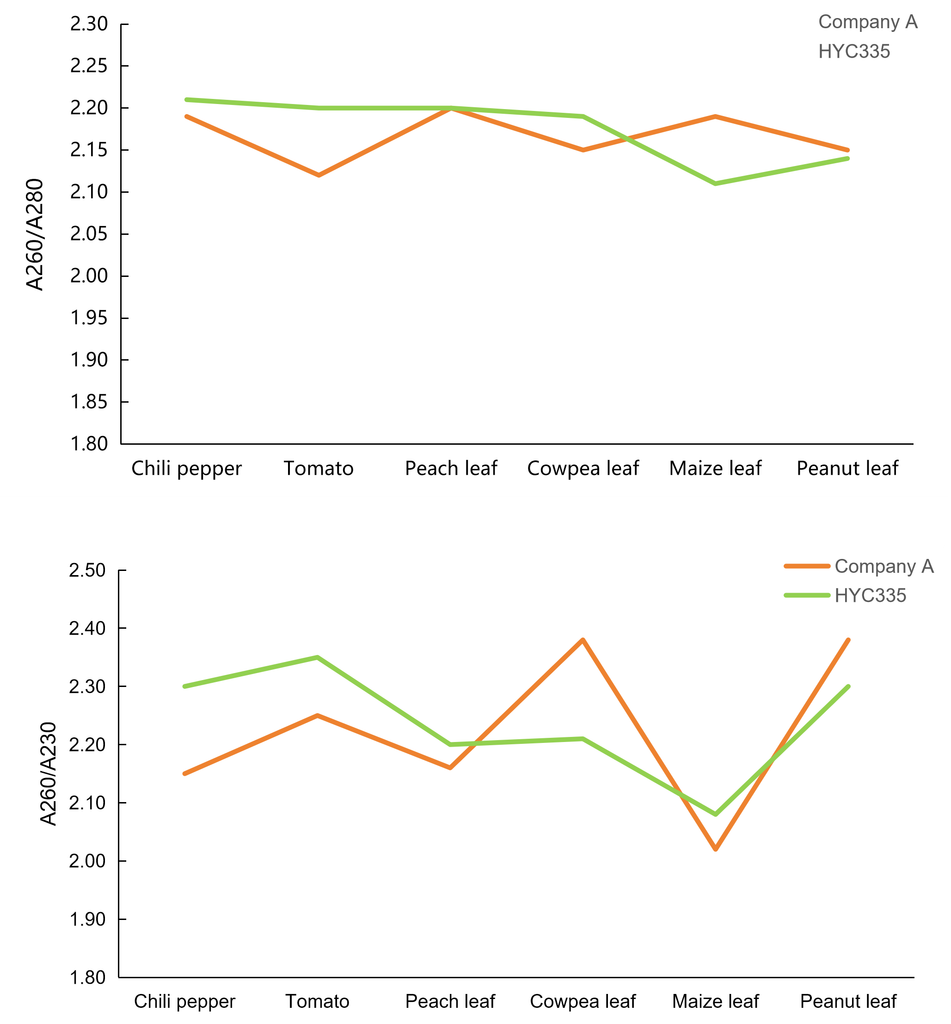
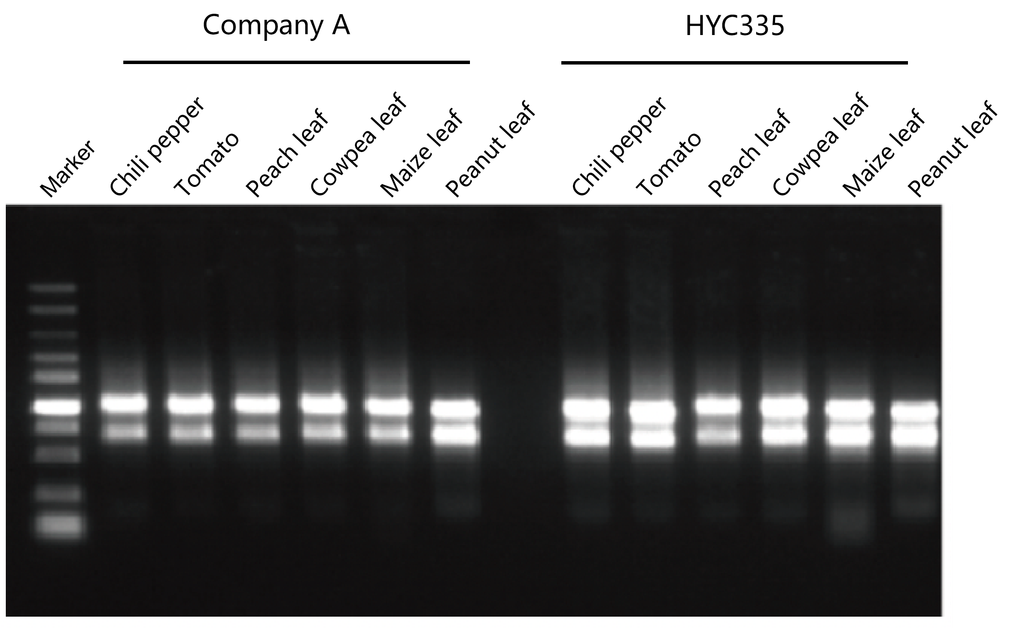
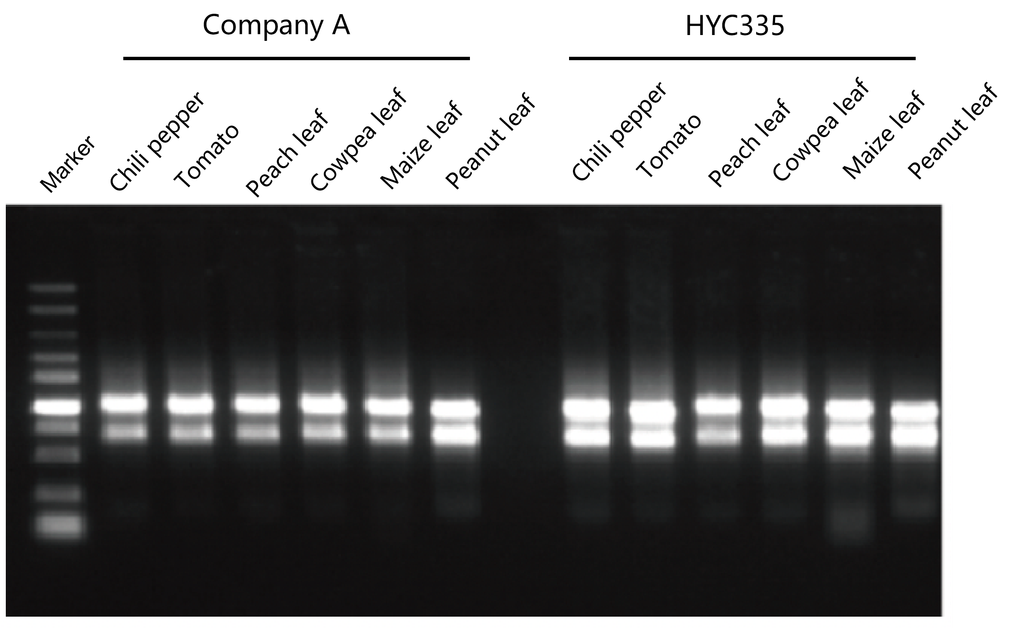
Experiment 1: RNA Extraction from Common Plant Tissues and Fruit-Related Samples
A total of 100 mg of each sample (chili pepper, tomato, peach leaves, cowpea leaves, maize leaves, and peanut leaves) was collected. Total RNA was extracted using the HYC335 Plant RNA Extraction Kit and Company A’s magnetic bead-based Plant RNA Extraction Kit, respectively. The RNA was eluted in a final volume of 100 μL. The extraction results are presented below:
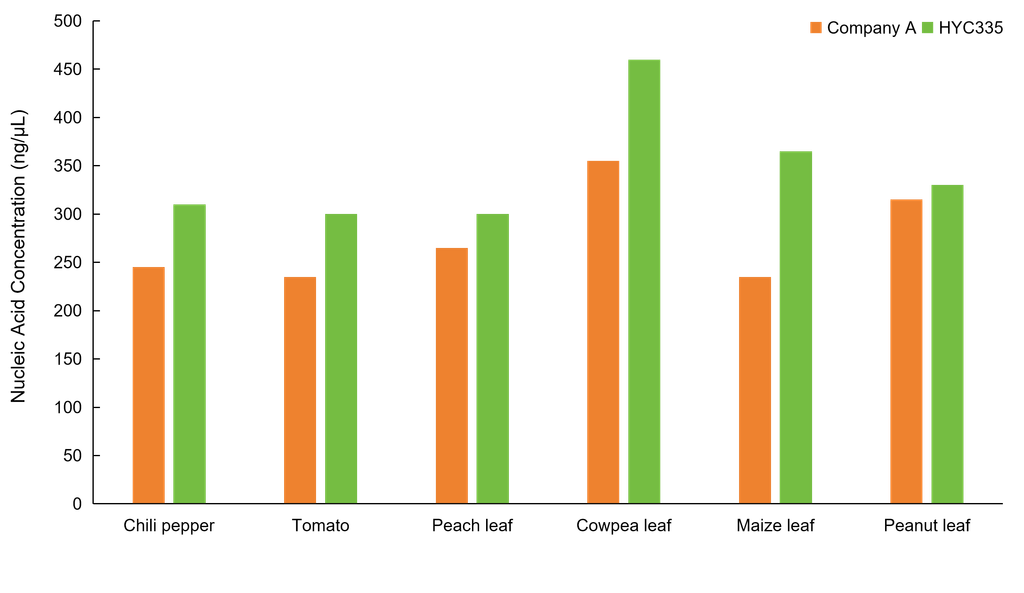
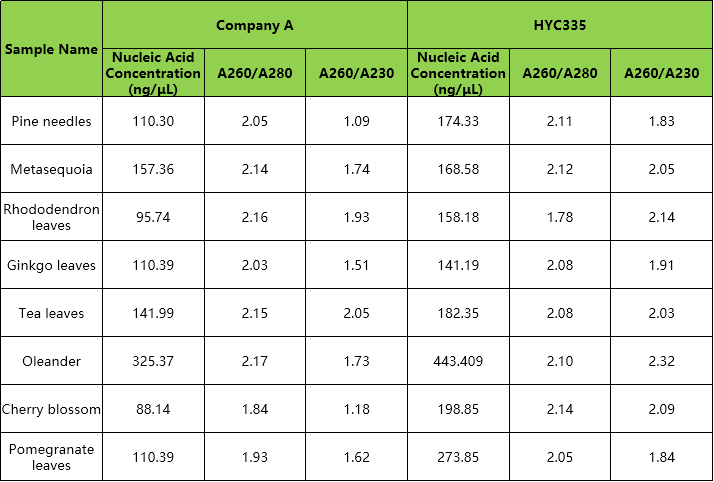
Experiment 2: RNA Extraction from Polysaccharide- and Polyphenol-Rich Plant Samples
Total RNA was extracted from various polysaccharide- and polyphenol-rich plant samples using the HYC335 Plant RNA Extraction Kit and Company A’s magnetic bead-based Plant RNA Extraction Kit. The extraction results are presented below:
While high-quality RNA is essential for transcriptome research and gene expression analysis, plant genomic DNA plays an equally important role in many areas of agricultural biotechnology and molecular biology. From plant pathogen identification and genetic diversity analysis to molecular marker-assisted breeding and genetic characterization, reliable DNA extraction is another fundamental step in plant molecular research.
However, just like RNA extraction, isolating high-quality DNA from plant tissues comes with its own challenges. In our next artical, we will turn our attention to plant genomic DNA extraction. We will explore the key challenges of plant DNA purification and introduce a HYASEN spin column-based Plant Genomic DNA Extraction solution, including its technical features, sample compatibility and experimental performance.
HYASEN BIOTECH Molecular Solutions for Plant Research