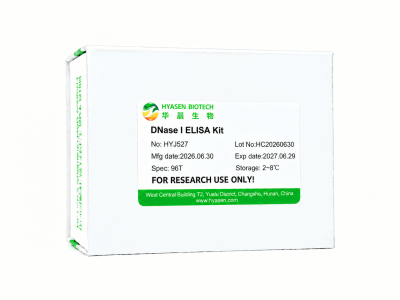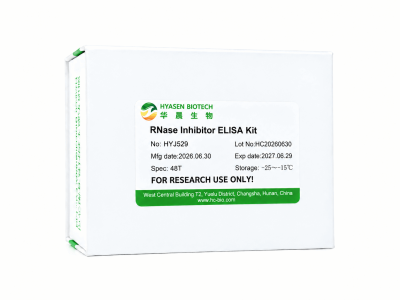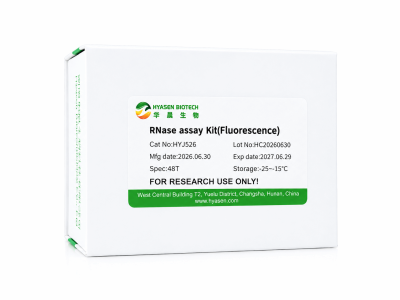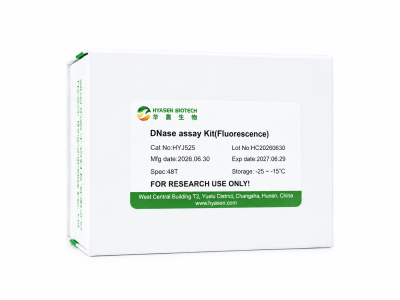
Product Overview
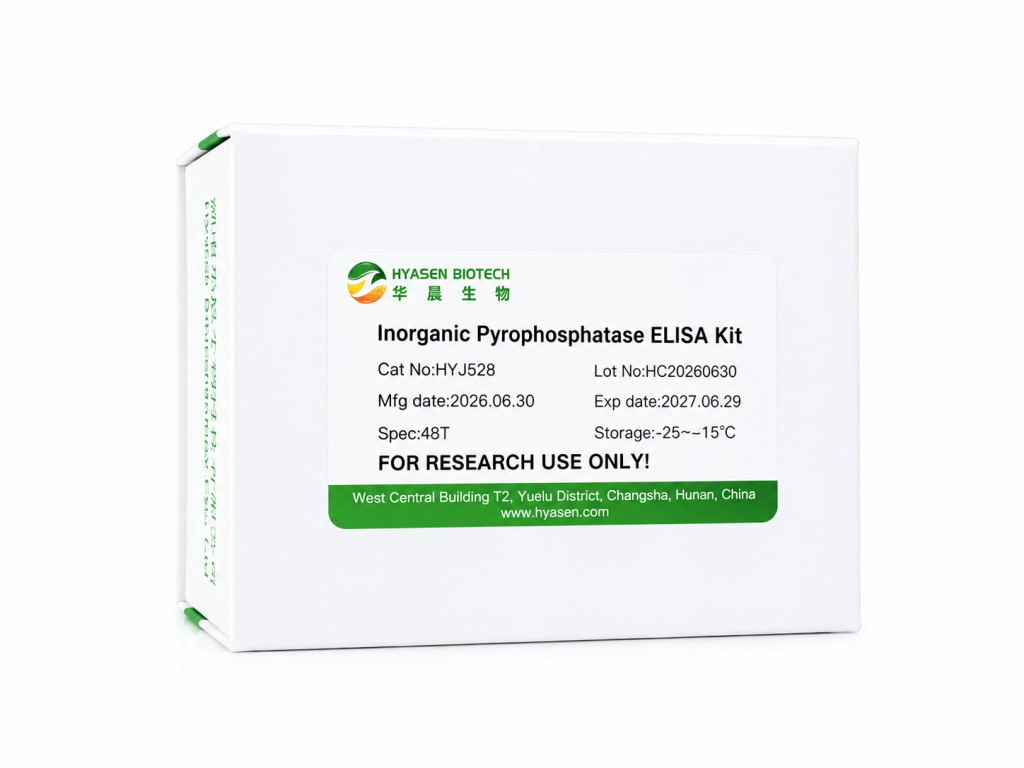
The Inorganic Pyrophosphatase ELISA Kit employs the double-antibody sandwich method for the quantitative detection of inorganic pyrophosphatase concentrations in samples — a relevant process residual to monitor when inorganic pyrophosphatase is used as a reaction additive in nucleic acid synthesis or in vitro transcription workflows, where its complete removal or accurate quantification may be required for downstream product characterization. The assay employs a sandwich ELISA format: the microwell plate is pre-coated with anti-inorganic pyrophosphatase capture antibody. Inorganic pyrophosphatase present in the sample binds to the immobilized antibody in the wells. An HRP-labeled detection antibody is then added, specifically binding to the captured inorganic pyrophosphatase and forming an antibody-antigen-enzyme-labeled antibody sandwich complex. After washing, TMB substrate solution is added and catalyzed by HRP to generate a blue color product, which turns yellow upon addition of an acidic stop solution. The intensity of the yellow coloration is directly proportional to the concentration of inorganic pyrophosphatase in the sample, and is quantified by measuring absorbance (OD value) at 450 nm using a microplate reader. Inorganic pyrophosphatase concentration is calculated by reference to a standard curve. This kit supports molecular biology and mRNA quality control laboratories, reagent manufacturers, and CDMOs in accurately monitoring inorganic pyrophosphatase levels throughout process development, raw material characterization, and release testing workflows.
Components
| Components | 48T | 96T |
| ELISA Microplate | 8×6 | 8×12 |
| Enzyme conjugate (100×) | 60uL | 120uL |
| Dilution buffe | 15mL | 30mL |
| TMB substrate solution | 6mL | 12mL |
| Stop solution | 3mL | 6mL |
| Concentrated wash buffer (10x) | 15mL | 30mL |
| Standard (0. 1mg/mL) | 25uL | 50uL |
| Plate sealer | 2 pieces | 4 pieces |
Product Features
- Specific double-antibody sandwich detection: The pre-coated capture antibody combined with an HRP-labeled detection antibody provides specific, sensitive quantification of inorganic pyrophosphatase, minimizing cross-reactivity with other proteins present in the sample.
- Standardized colorimetric readout for straightforward quantification: Results are read as a simple absorbance measurement at 450 nm using a standard microplate reader, providing a quantitative, reproducible readout suitable for routine residual protein monitoring in QC workflows.
- Reliable quantification via standard curve reference: Sample concentrations are calculated against a standard curve generated from known inorganic pyrophosphatase concentrations, ensuring accurate, reproducible quantification across sample batches.
FAQ
Q1: What is inorganic pyrophosphatase, and why would its concentration need to be monitored?
Inorganic pyrophosphatase is an enzyme commonly used as a reaction additive in nucleic acid synthesis and in vitro transcription workflows, where it hydrolyzes inhibitory pyrophosphate byproducts to improve reaction yield. In applications where this enzyme’s residual presence or precise concentration is relevant to product characterization, process development, or quality control, accurate quantification is important to ensure consistency and compliance with specifications.
Q2: How does the double-antibody sandwich ELISA format ensure specific detection of inorganic pyrophosphatase?
The assay relies on two distinct binding events: first, a capture antibody pre-coated on the plate binds specifically to inorganic pyrophosphatase in the sample; second, an HRP-labeled detection antibody binds to a different epitope on the same captured protein. This dual-antibody recognition requirement helps ensure that the colorimetric signal generated specifically reflects inorganic pyrophosphatase content, rather than cross-reactive proteins.
Q3: What equipment is required to run this assay, and how are results quantified?
The assay requires standard ELISA equipment, including a plate washer and a microplate reader capable of measuring absorbance at 450 nm. Results are quantified by comparing sample absorbance (OD) values to a standard curve generated using known concentrations of inorganic pyrophosphatase, allowing straightforward calculation of concentration in unknown samples.