Product Overview
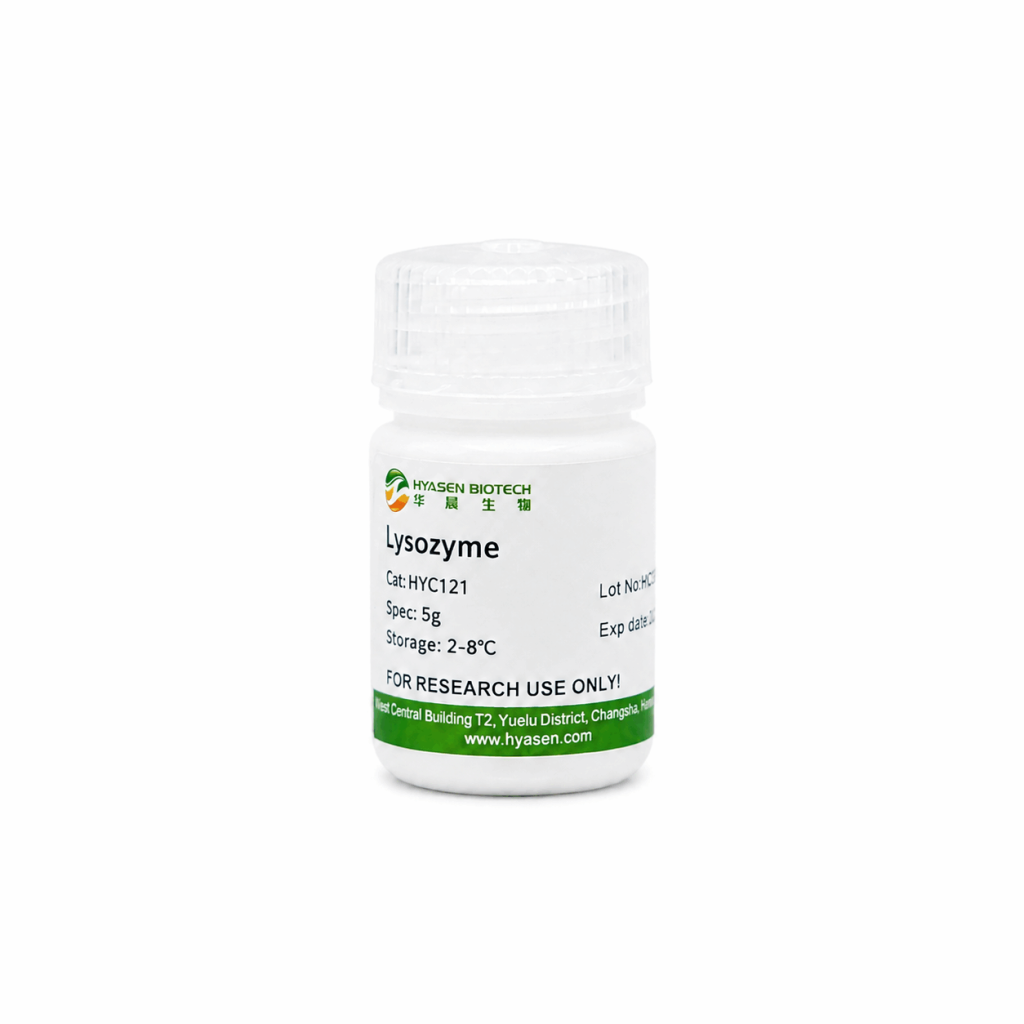
Lysozyme is a naturally occurring antimicrobial enzyme that specifically hydrolyzes the β-(1,4)-glycosidic bonds between N-acetylmuramic acid (NAM) and N-acetylglucosamine (NAG) in bacterial peptidoglycan, leading to bacterial cell wall disruption and cell lysis. HYC121 Lysozyme is a high-quality enzyme preparation designed for efficient bacterial cell disruption and biological sample preparation. It provides reliable lysis performance, especially for Gram-positive bacteria with high peptidoglycan content. With excellent enzymatic activity and broad application compatibility, HYC121 is suitable for molecular biology workflows including DNA/RNA extraction, recombinant protein preparation, microbial analysis, and laboratory research applications.
Components
| Components | Size-1 | Size-2 | Size-3 |
| Lysozyme | 1g | 5g | 100g |
Product Features
- Efficient Bacterial Cell Wall Lysis: Lysozyme specifically targets bacterial peptidoglycan structures and efficiently disrupts bacterial cell walls.
- High Specificity Toward Peptidoglycan: Unlike non-specific chemical lysis methods, Lysozyme provides enzymatic degradation of bacterial cell walls.
- Ideal for Molecular Biology Sample Preparation: Lysozyme supports workflows requiring efficient microbial cell disruption.
FAQ
Q1: What is Lysozyme?
Lysozyme is an antimicrobial enzyme that breaks down bacterial cell walls by hydrolyzing peptidoglycan structures. It is commonly used for bacterial cell lysis and molecular biology sample preparation.
Q2: Which bacteria are sensitive to Lysozyme treatment?
Lysozyme is particularly effective against many Gram-positive bacteria because their cell walls contain high levels of exposed peptidoglycan. It can also assist in disrupting certain Gram-negative bacteria when combined with additional treatments such as EDTA or detergents.
Q3: What applications is Lysozyme suitable for?
Lysozyme is suitable for bacterial cell disruption and biological sample preparation workflows, including DNA/RNA extraction, recombinant protein preparation, microbial analysis, and molecular biology research. It is particularly useful for workflows involving Gram-positive bacteria with high peptidoglycan content.