Product Overview
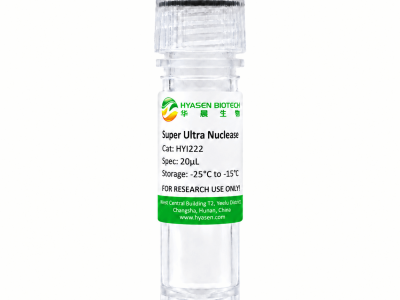
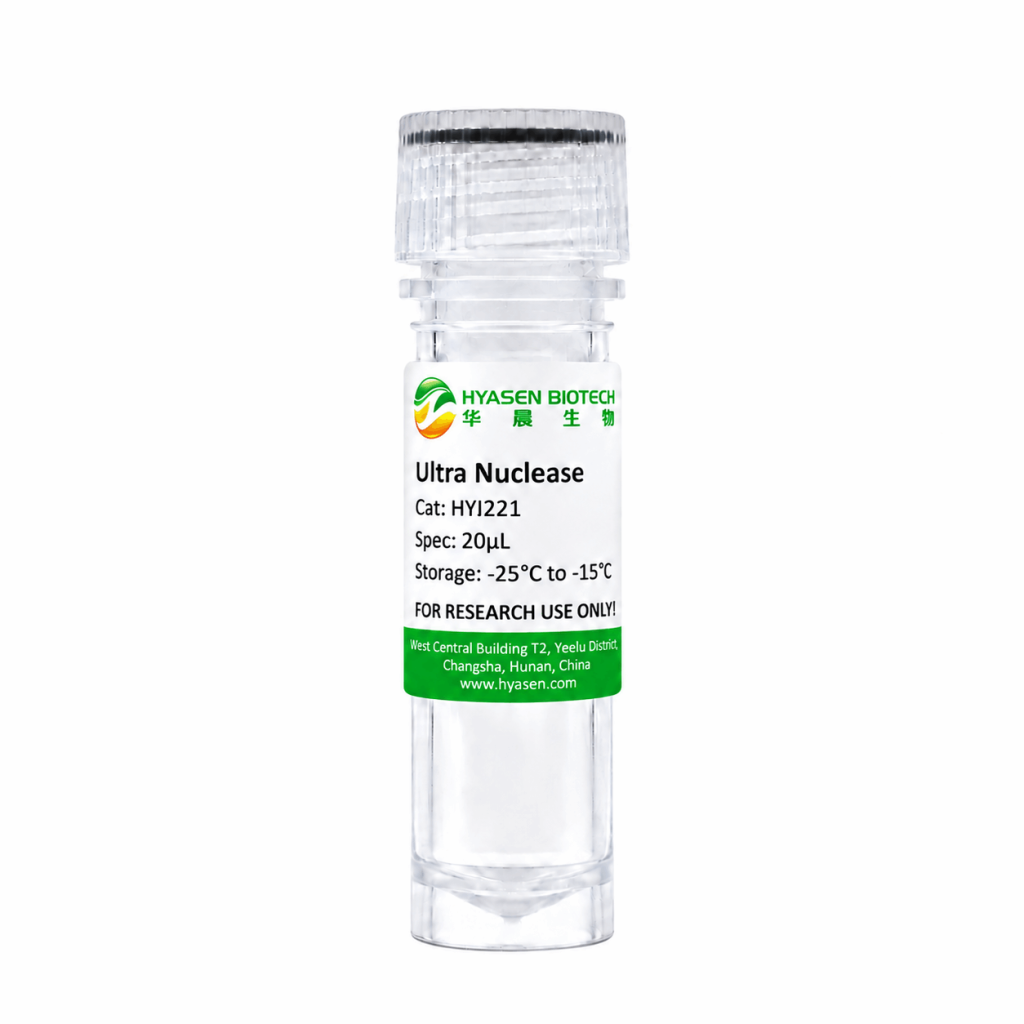
Ultra Nuclease is a genetically engineered endonuclease derived from Serratia marcescens, capable of degrading DNA or RNA — whether double- or single-stranded, linear or circular — under a broad range of reaction conditions. The enzyme comprehensively degrades nucleic acids down to short 5′-monophosphate oligonucleotides of just 3–5 bases in length, ensuring thorough clearance of nucleic acid contaminants rather than partial fragmentation. Following genetic engineering modification, Ultra Nuclease is fermented, expressed, and purified in E. coli. A key practical benefit of this enzyme is its ability to significantly reduce the viscosity of cell supernatants and cell lysates in research and bioprocessing applications — a common challenge caused by residual host cell nucleic acids that can complicate downstream handling. By efficiently degrading these nucleic acids, Ultra Nuclease also improves protein purification efficiency and supports more effective downstream functional research. Beyond general research use, Ultra Nuclease serves as a residual host nucleic acid removal reagent across a range of biomanufacturing applications, including gene therapy vector production, viral purification, vaccine manufacturing, and protein and polysaccharide pharmaceutical production — supporting the reduction of host cell DNA/RNA impurities to meet product purity requirements.
Components
| Components | 5 KU | 50KU | 500KU | 5000KU |
| Ultra Nuclease | 20μL | 200μL | 2mL | 20mL |
Product Features
- Comprehensive nucleic acid degradation: Ultra Nuclease degrades all forms of DNA and RNA — double- or single-stranded, linear or circular — down to short 5′-monophosphate oligonucleotides of just 3–5 bases, ensuring thorough clearance rather than partial fragmentation of residual nucleic acids.
- Effective viscosity reduction for downstream processing: By efficiently degrading nucleic acids in cell supernatants and lysates, this enzyme significantly reduces sample viscosity, easing handling during filtration, centrifugation, and chromatography steps, and improving overall purification efficiency.
- Broad applicability across biomanufacturing platforms: Suitable for use as a host residual nucleic acid removal reagent across gene therapy vector production, viral purification, vaccine manufacturing, and protein/polysaccharide pharmaceutical production, supporting nucleic acid impurity clearance across diverse biologics manufacturing workflows.
FAQ
Q1: What types of nucleic acid substrates can Ultra Nuclease degrade?
Ultra Nuclease is active on DNA and RNA in all common structural forms — double-stranded, single-stranded, linear, and circular — degrading them completely into short 5′-monophosphate oligonucleotides of 3–5 bases in length. This broad substrate range makes it effective for comprehensive removal of diverse nucleic acid contaminants present in complex biological samples.
Q2: How does Ultra Nuclease help address viscosity issues in cell lysates or supernatants?
High molecular weight nucleic acids released from lysed cells are a primary contributor to the viscosity of cell lysates and supernatants, which can complicate filtration, centrifugation, and chromatography steps in downstream processing. By efficiently degrading these nucleic acids into short oligonucleotide fragments, Ultra Nuclease reduces sample viscosity, easing handling and improving the efficiency of subsequent purification steps.
Q3: In what types of biomanufacturing processes is Ultra Nuclease commonly used?
Ultra Nuclease is commonly used as a host residual nucleic acid removal reagent in gene therapy vector production, viral vector and vaccine purification, and protein or polysaccharide pharmaceutical manufacturing, where reducing residual host cell DNA/RNA to acceptable levels is an important quality and regulatory consideration.