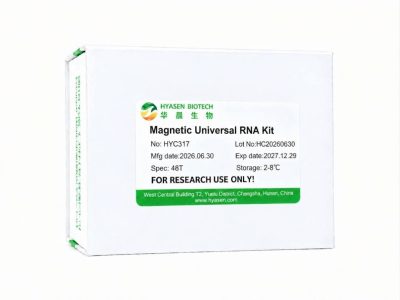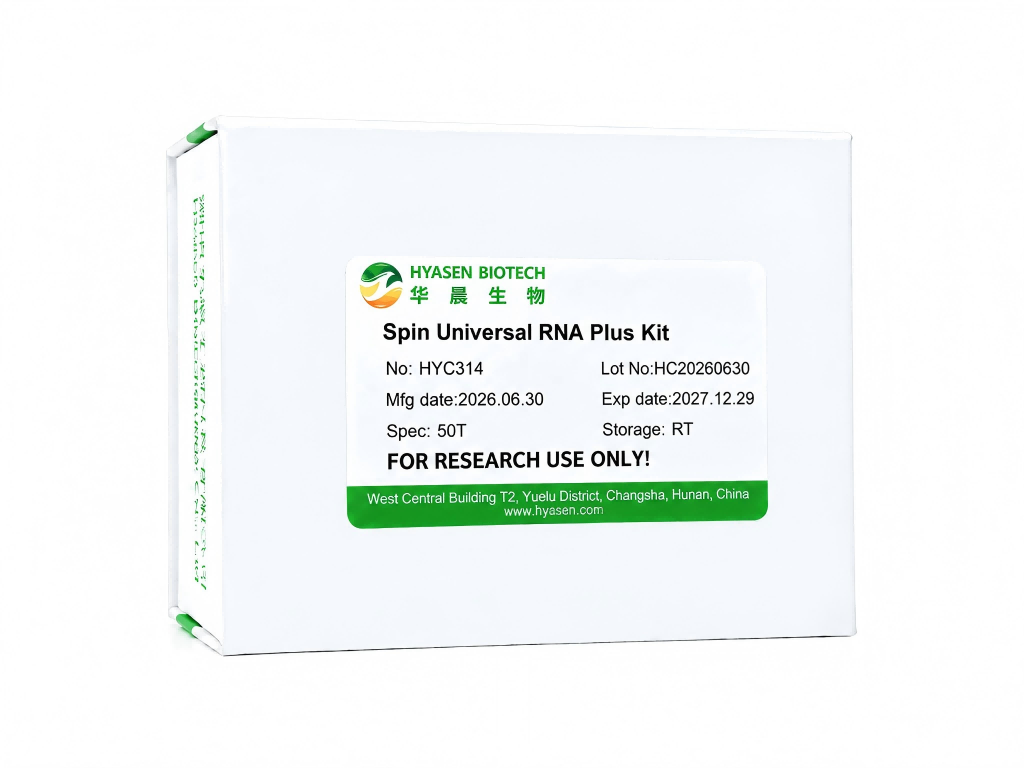
Product Overview
This spin column total RNA extraction kit is based on a modified TRIsolv method and is suitable for isolating total RNA from animal tissues, plant materials, a wide range of microorganisms, and cultured cells. The lysis reagent thoroughly lyses and homogenizes the sample. Under specialized high-salt conditions, RNA selectively binds to the silica membrane. The purification process minimizes protein contamination and effectively removes residual organic solvents, yielding high-purity, high-quality RNA. For RNA applications that are highly sensitive to trace DNA contamination, residual DNA can be removed by on-column digestion with RNase-Free DNase I. The purified RNA is ready for direct use in downstream applications, including RT-PCR, Northern blotting, dot blotting, and in vitro translation.
Components
| Components | 50T |
| DNase I (RNase Free) | 2×1000 U |
| 10×Reaction Buffer | 1000 μL |
| TRIsolv Reagent | 60 mL |
| TRIsolv Pal | 10 mL |
| Buffer RW1 | 40 mL |
| Buffer RW2* | 11 mL |
| RNase-Free Water | 10 mL |
| Spin Columns RM with Collection Tubes | 50 |
| RNase-Free Centrifuge Tubes (1.5 mL) | 50 |
Product Features
- Universal sample compatibility: The kit isolates total RNA from animal tissues, plant materials, microorganisms, and cultured cells, reducing the need for sample-specific kits in laboratories that work across different specimen types.
- High purity with minimal protein and solvent carryover: Specific RNA binding to the silica membrane under proprietary high-salt conditions sharply reduces protein contamination and effectively eliminates organic solvent residues, giving RNA of high purity and quality.
- On-column DNase I digestion for DNA-sensitive assays: Residual genomic DNA can be digested directly on the column with RNase-Free DNase I, which suits RNA assays that need high tolerance to trace DNA contamination.
FAQ
Q1: What should I do if precipitates form in TRIsolv Reagent?
Warm TRIsolv Reagent in a 56°C water bath for a few minutes until the precipitates dissolve. This does not affect reagent performance.
Q2: Why is my RNA yield low?
Possible causes include:
Sample degradation: Avoid repeated freeze–thaw cycles.
Excessive sample input: The sample volume should not exceed 10% of the volume of TRIsolv Reagent used.
Incomplete lysis: After adding TRIsolv Reagent, pipette up and down repeatedly to ensure complete sample lysis.
Insufficient elution volume: Use at least 30 μL of RNase-Free Water. Smaller elution volumes may reduce RNA recovery.
Ethanol not added to Buffer RW2 as instructed: Before using Buffer RW2 for the first time, add the appropriate volume of absolute ethanol as specified on the bottle label.
Q3: How can I prevent RNase contamination?
Use RNase-free plasticware and pipette tips, and avoid cross-contamination.
Bake glassware at 180°C for 4 hours before use. Plasticware can be soaked in 0.5 M NaOH for 10 minutes, rinsed thoroughly with water, and then autoclaved.
Use RNase-free water to prepare solutions.
Wear a disposable mask and gloves, and change gloves frequently during the procedure.