Product Overview
Expressing proteins with disulfide bonds can be challenging because proper disulfide bond formation is often essential for protein folding, stability, and biological activity. Conventional protein expression systems may require additional optimization to produce these proteins in a correctly folded form.
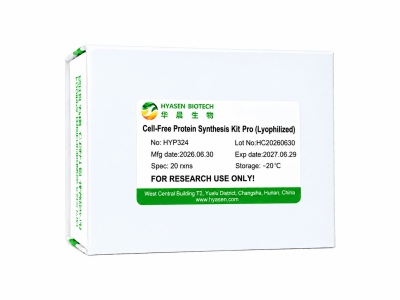
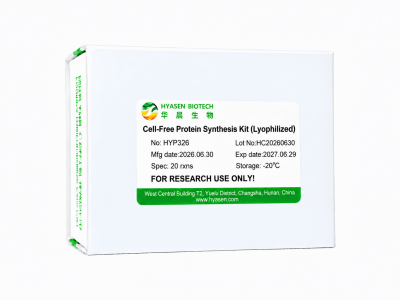
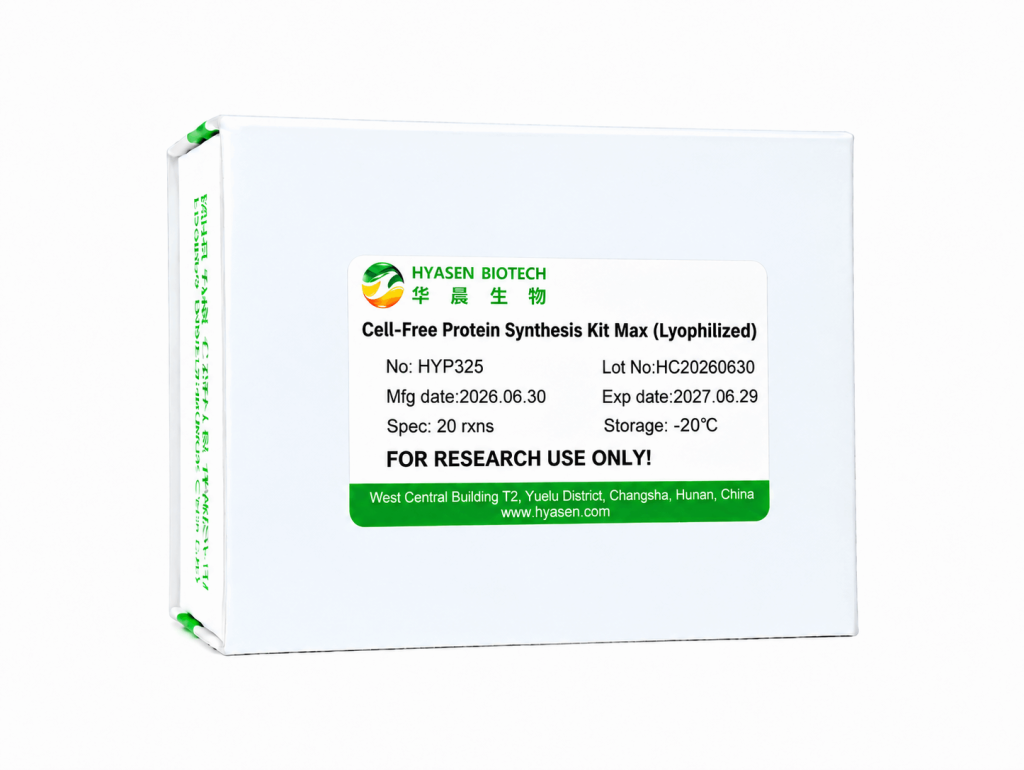
Hyasen Cell-Free Protein Synthesis Kit Max (Lyophilized) (HYP325) is an Escherichia coli-based cell-free expression system designed for rapid protein synthesis, with particular suitability for proteins containing disulfide bonds.
The kit uses bacterial cell lysate containing ribosomes, translation factors, and enzymes, together with amino acids, nucleotides, energy sources, and inorganic salts to support protein synthesis outside living cells. After reconstitution, suitable DNA or RNA templates can be used to direct the production of target proteins without conventional cell culture and induction steps.
The Max formulation supports the expression of conventional proteins while offering an option for targets that contain disulfide bonds. This makes it useful for protein research involving targets whose folding and stability depend on disulfide bond formation. However, successful expression of soluble, correctly folded proteins still depends on the target sequence, protein structure, and reaction conditions.
Protein synthesis can begin within 1–2 hours, with maximum expression levels potentially reached after 8–24 hours. Under optimized conditions, protein yields can exceed 3 mg/mL, although actual yields vary depending on the protein and experimental setup.
The lyophilized formulation supports convenient reaction preparation in microcentrifuge tubes or 96-well plates, making the kit suitable for protein expression screening, small-scale protein production, and synthetic biology research.
Product Features
- Suitable for Disulfide Bond-Containing Proteins: Designed for conventional protein expression and particularly suited to targets containing disulfide bonds, providing an option for proteins that require these bonds for proper folding and stability.
- Rapid, High-Yield Protein Expression: Supports protein synthesis within 1–2 hours, with maximum expression potentially reached after 8–24 hours. Protein yields can exceed 3 mg/mL under optimized conditions, depending on the target protein and reaction setup.
- Flexible, Lyophilized Cell-Free Expression System: The freeze-dried, E. coli-based formulation supports DNA- or RNA-templated protein synthesis in microcentrifuge tubes or 96-well plates, eliminating the need for live-cell cultivation during protein production.
FAQ
Q1: Can the Cell-Free Protein Synthesis Kit Max (Lyophilized) express proteins containing disulfide bonds?
Yes. HYP325 Cell-Free Protein Synthesis Kit Max (Lyophilized) is particularly suited for expressing proteins containing disulfide bonds, while also supporting conventional protein targets. Disulfide bonds can be important for protein folding, stability, and function. However, successful soluble expression and correct disulfide bond formation depend on the target protein and reaction conditions, so experimental optimization may still be necessary.
Q2: What is the difference between the Max and Pro versions of the Cell-Free Protein Synthesis Kit?
HYP325 Cell-Free Protein Synthesis Kit Max (Lyophilized) is particularly suited for proteins containing disulfide bonds. In contrast, the Pro formulation includes the GroEL/GroES molecular chaperone system to help improve protein folding and reduce aggregation. Both support rapid cell-free protein synthesis, but the preferred formulation depends on the protein’s folding requirements and expression characteristics.
Q3: How long does protein synthesis take, and how should the lyophilized kit be stored?
HYP325 Cell-Free Protein Synthesis Kit Max (Lyophilized) supports protein synthesis within 1–2 hours, with maximum expression potentially requiring 8–24 hours. Under optimized conditions, yields may exceed 3 mg/mL. The kit is shipped at 4°C and should be stored at −20°C for up to 12 months. After reconstitution, the reagents can be stored at −20°C for up to 1 month or at −80°C for up to 12 months.