Product Overview
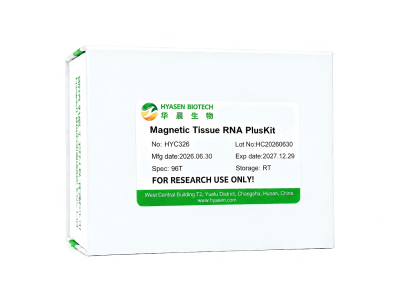
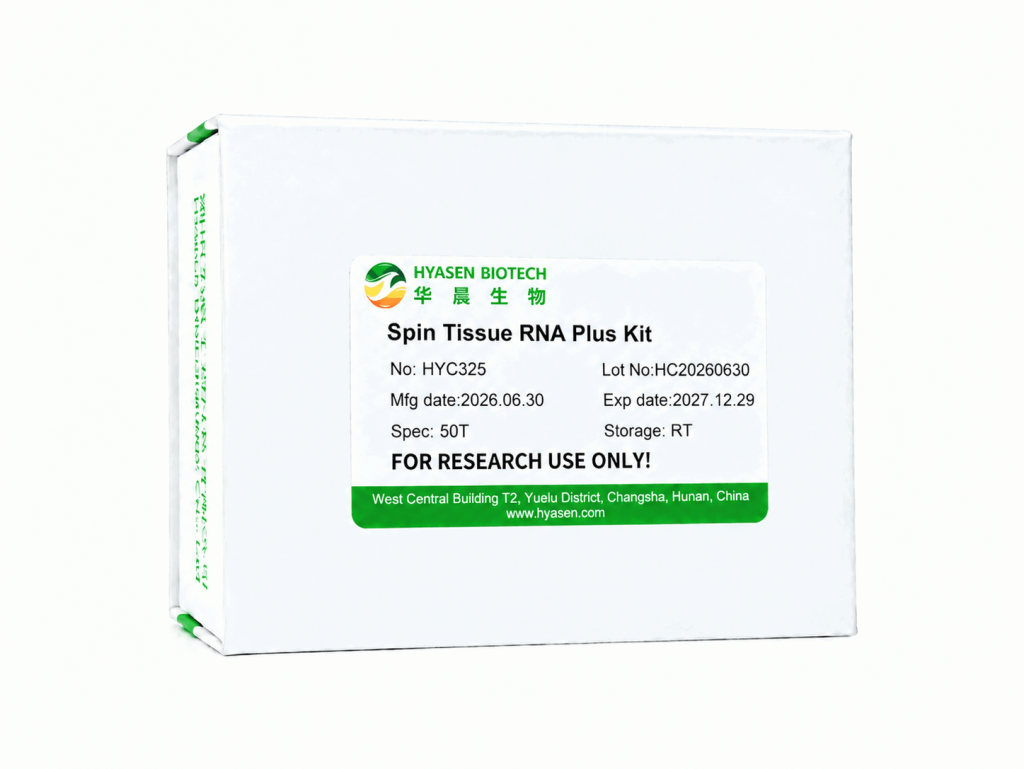
The Spin Tissue RNA Plus Kit combines high-efficiency guanidinium thiocyanate lysis technology with silica membrane purification for high-yield total RNA extraction from animal cells and tissues. Guanidinium thiocyanate is a strong chaotropic agent that rapidly denatures proteins, including RNases, helping preserve RNA integrity from the start of the extraction. The kit handles up to 30 mg of tissue or 1×10⁷ cells per extraction, covering the input range typically used for routine tissue and cell culture work. For RNA assays sensitive to trace genomic DNA, residual DNA can be eliminated through on-column digestion with RNase-Free DNase I, avoiding a separate cleanup step after DNA removal. The highly pure RNA obtained is applicable to various downstream experiments, including RT-PCR, Northern Blot, and Dot Blot.
Components
| Components | 50T |
| DNase I (RNase Free) | 2×1000 U |
| 10×Reaction Buffer | 1000 μL |
| Buffer RL | 35 mL |
| Buffer RW1 | 30 mL |
| Buffer RW2* | 11 mL |
| RNase-Free Water | 10 mL |
| Spin Columns RM with Collection Tubes | 50 |
| RNase-Free Centrifuge Tubes (1.5 mL) | 50 |
Product Features
- Guanidinium thiocyanate lysis for RNA protection: The strong chaotropic lysis chemistry rapidly denatures proteins, including RNases, helping preserve RNA integrity from the moment of sample lysis.
- Defined input range for tissue and cell samples: The kit handles up to 30 mg of tissue or 1×10⁷ cells per extraction, giving a clear input guideline for consistent results across sample batches.
- On-column DNase I digestion for DNA-sensitive assays: Residual genomic DNA can be digested directly on the column using RNase-Free DNase I, which suits RNA assays that are sensitive to trace genomic DNA contamination.
FAQ
Q1: What is the maximum input amount for this kit?
The kit is designed for a maximum input of 30 mg of tissue or 1×10⁷ cells per extraction.
Q2: How does guanidinium thiocyanate lysis help protect RNA integrity?
Guanidinium thiocyanate is a strong chaotropic agent that rapidly denatures proteins, including RNases, as soon as the sample is lysed. This helps limit RNA degradation during the early steps of the extraction, before the RNA binds to the silica membrane.
Q3: How do I remove genomic DNA for assays sensitive to DNA contamination?
Residual genomic DNA can be eliminated through on-column digestion using RNase-Free DNase I, which is recommended for RNA assays sensitive to trace genomic DNA.