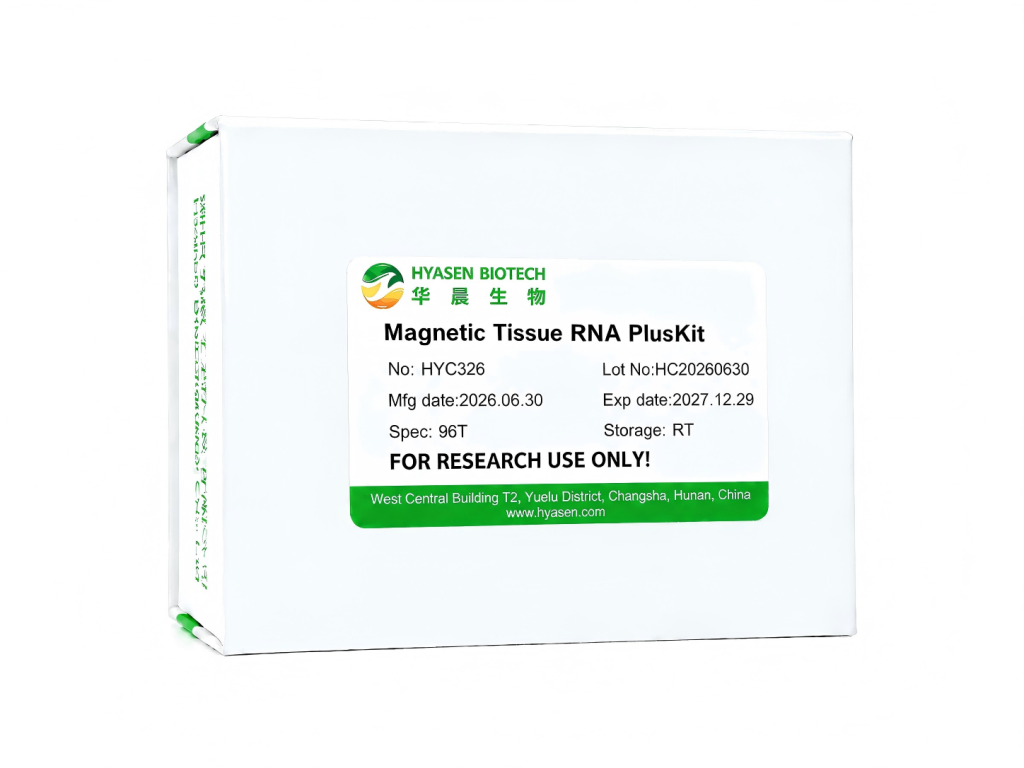
Product Overview
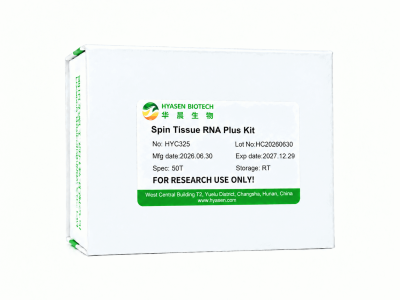
The Magnetic Tissue RNA Plus Kit provides a simple and high-performance protocol for total RNA extraction from animal tissues. After physical disruption of the tissue sample, RNA in the lysate binds to silica-coated magnetic beads under high-salt conditions. Impurities such as proteins are washed away with wash buffers, and genomic DNA is eliminated through DNase I digestion built into the workflow. The purified RNA is then washed again and eluted into RNase-free water. No toxic or hazardous reagents, including β-mercaptoethanol, phenol, or chloroform, are required at any step, which improves laboratory safety and simplifies handling compared with traditional organic extraction methods. Because DNA-bound beads are separated with a magnet rather than centrifugation, the workflow suits both manual bench-top use and integration into automated platforms. The resulting RNA has high integrity and is compatible with diverse downstream applications, including RT-PCR, real-time PCR, microarray analysis, and in vitro translation.
Components
| Components | 96 T |
| DNase I (RNase Free) | 4×1000 U |
| 10×Reaction Buffer | 2×1000 μL |
| Buffer PL1 | 50 mL |
| Buffer PL2 | 15 mL |
| Buffer RW1 | 50 mL |
| Buffer RW2* | 33 mL |
| RNase-Free Water | 8 mL |
| Magbeads PN | 5 mL |
Product Features
- Hazardous-reagent-free workflow: The extraction requires no β-mercaptoethanol, phenol, or chloroform, improving laboratory safety while still delivering high-integrity RNA.
- Built-in genomic DNA removal: DNase I digestion is included in the workflow to eliminate genomic DNA, removing the need for a separate DNA-removal step before downstream use.
- Magnetic bead format for flexible processing: Silica-coated magnetic beads capture RNA through a straightforward bind-wash-elute workflow, suiting manual processing as well as adaptation to automated extraction platforms.
FAQ
Q1: Does this kit require phenol, chloroform, or β-mercaptoethanol?
No. The workflow is designed to avoid all three of these hazardous reagents, while still producing high-integrity RNA suitable for sensitive downstream applications.
Q2: How is genomic DNA removed during the extraction?
Genomic DNA is eliminated via DNase I digestion, which is performed as part of the extraction workflow before the RNA is washed again and eluted into RNase-free water.
Q3: What downstream applications is the purified RNA suitable for?
The high-integrity RNA is compatible with RT-PCR, real-time PCR, microarray analysis, and in vitro translation, among other downstream applications.