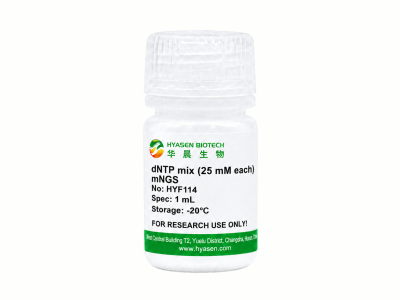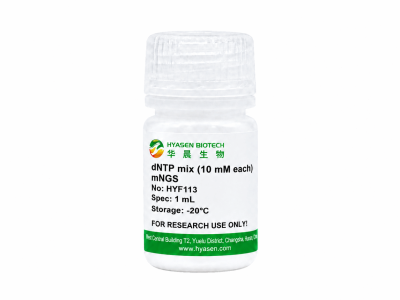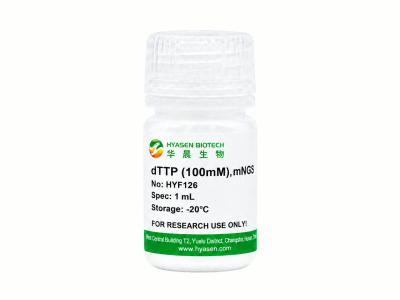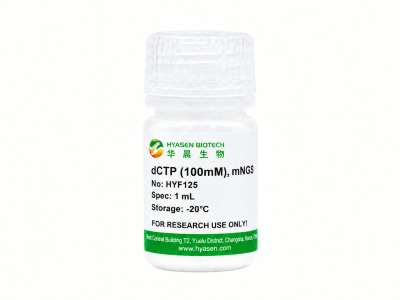
Product Overview
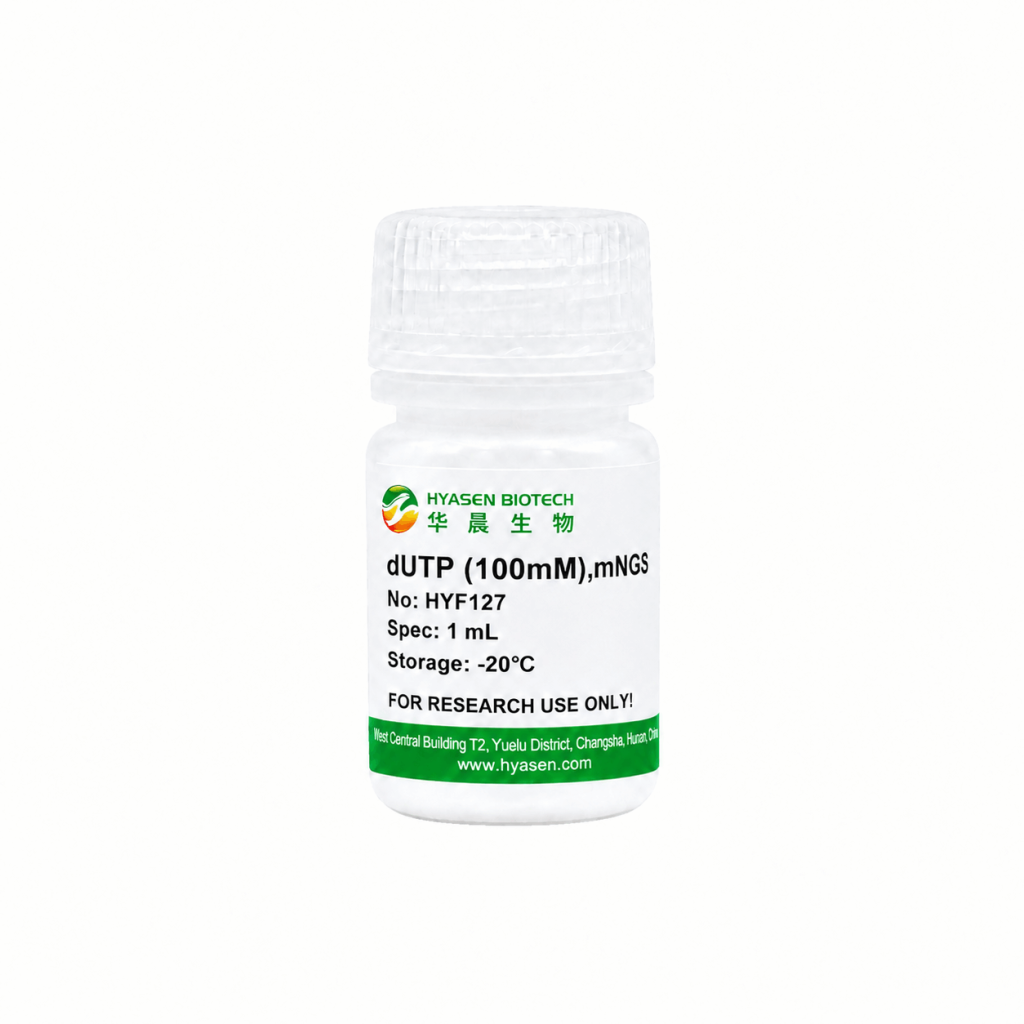
dNTPs are among the most basic raw materials in molecular biology, and their quality affects every enzymatic reaction that uses them. Beyond high purity, low contamination and good performance in downstream applications are what separate a dependable nucleotide from a merely adequate one. dUTP (100mM), mNGS is developed with this in mind, and every batch is produced according to GMP guidelines. The established QC method meets the requirements of the United States, European, and Chinese Pharmacopoeias and other regulations. dUTP is the uracil-containing deoxynucleotide. In amplification workflows it is commonly used in place of dTTP, so that amplicons carry uracil in place of thymine, a feature that laboratories use for carryover contamination control with uracil-DNA glycosylase. The product is a colorless liquid solution with an HPLC purity of ≥99%, adjusted to pH 7.0 with high-purity NaOH solution. It is free of DNase, RNase, and phosphatase, and of contamination by qPCR, PCR, and reverse transcription inhibitors.
All components have undergone strict functional quality control and meet strict requirements for DNA contamination, which is the parameter that matters most for sensitive, low-background workflows such as metagenomic sequencing. After extensive verification and validation, the product is suitable for a wide range of molecular biology applications, including PCR, qPCR, high-fidelity PCR, long-chain PCR, cDNA synthesis, RT-PCR, RCA, MDA, DNA markers, and DNA sequencing. It can be used directly in conventional reactions such as PCR, and diluted with ultra-pure water to the working concentration a protocol requires. Solutions with a concentration for each nucleotide can also be provided, which suits kit manufacturers that need a specific stock concentration for their own formulations.
Specifications
| Product name | Size-1 | Size-2 | Size-3 |
| dUTP (100mM), mNGS | 1 mL | 5 × 1 mL | 100 mL |
Product Features
- Ultra-high purity, HPLC ≥99%: High purity supports efficient, consistent incorporation by DNA polymerases and reverse transcriptases across amplification, sequencing, and synthesis reactions.
- Free of nucleases, phosphatase, and reaction inhibitors, with strict DNA contamination control: The product is free of DNase, RNase, phosphatase, and qPCR, PCR, and RT inhibitors, and all components meet strict requirements for DNA contamination, protecting sensitive, low-background assays.
- GMP-guideline production with pharmacopoeia-level QC: Each batch is produced according to GMP guidelines, and the QC method meets the requirements of the US, European, and Chinese Pharmacopoeias, which supports the documentation needs of diagnostic and kit manufacturers. Customized stock concentrations (2, 10, 25, 100, 400 mM) are available.
FAQ
Q1: What does the “mNGS” designation mean for this dUTP?
The mNGS version is intended for sequencing and detection workflows where background contamination matters most. It is produced under GMP guidelines, free of DNase, RNase, phosphatase, and qPCR, PCR, and RT inhibitors, with all components under strict functional quality control and meeting strict requirements for DNA contamination. Please contact us for details of the DNA contamination specification and testing method for your application.
Q2: How is dUTP different from dTTP, and when is it used?
dUTP carries uracil, while dTTP carries thymine. dUTP is commonly used in place of dTTP in PCR and qPCR mixes, so that the amplicons contain uracil. This lets laboratories treat later reactions with uracil-DNA glycosylase to remove carried-over amplicons from earlier runs. Whether dUTP fits a given workflow depends on the DNA polymerase used, so please check polymerase compatibility for your system.
Q3: Which concentrations are available, and which applications is it validated for?
The standard supply form is a 100 mM solution, and 2 mM, 10 mM, 25 mM, and 400 mM solutions can also be provided. Following verification and validation, the product is suitable for PCR, qPCR, high-fidelity PCR, long-chain PCR, cDNA synthesis, RT-PCR, RCA, MDA, DNA markers, and DNA sequencing.