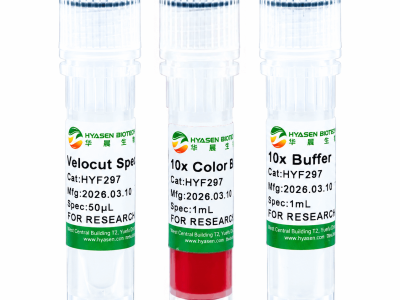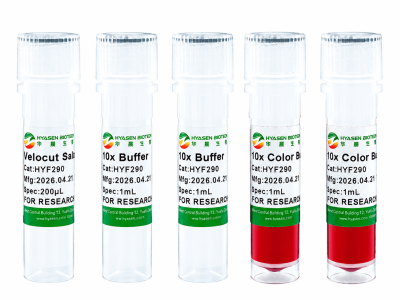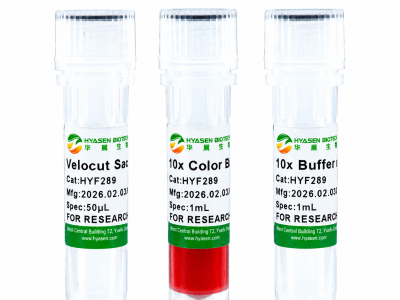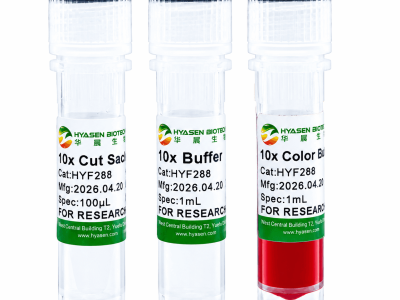
Product Overview
Velocut DraIII is an engineered restriction endonuclease developed for fast DNA digestion in molecular biology workflows. Its rapid digestion capability helps reduce incubation time and simplify restriction enzyme procedures, making it suitable for routine DNA analysis and sample preparation. Under suitable reaction conditions, Velocut DraIII can digest DNA within 5–15 minutes. This shorter reaction time can help streamline experimental workflows and reduce the time required for restriction digestion compared with protocols that require longer incubation periods.
Velocut DraIII is compatible with universal Buffer and Color Buffer, offering flexibility for different DNA digestion workflows. When used with an appropriate buffer and reaction setup, it can be incorporated into restriction digestion procedures involving different DNA substrates. Color Buffer contains a density reagent and red and yellow tracking dyes, allowing the digestion reaction mixture to be loaded directly onto an agarose gel without adding a separate loading dye. In a 1% agarose gel, the red dye migrates similarly to approximately 2.5 kb double-stranded DNA fragments, while the yellow dye migrates similarly to approximately 10 bp double-stranded DNA fragments. These tracking dyes help users monitor electrophoresis progress during DNA fragment analysis.
Velocut DraIII can be used in DNA digestion workflows involving plasmid DNA, genomic DNA, viral DNA, and PCR products, provided the target DNA contains the appropriate recognition site. It is suitable for restriction analysis, DNA sample preparation, and other molecular biology procedures that require sequence-specific DNA cleavage. DraIII is associated with the isoschizomer AdeI. Although isoschizomers recognize the same DNA sequence, they may differ in their sensitivity to DNA methylation. For experiments involving methylated DNA, the suitability of the enzyme should therefore be assessed according to the substrate’s methylation status and the requirements of the downstream application.
Components
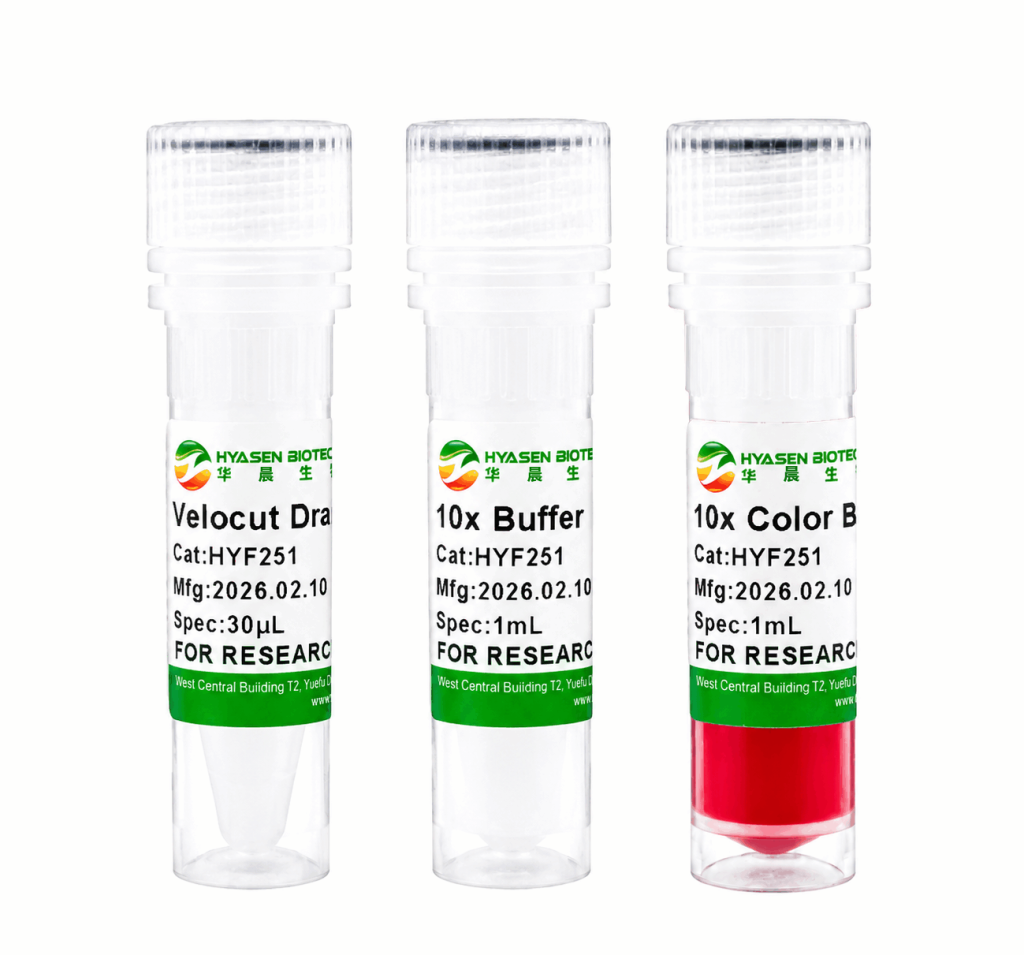
| Components | 30 rxns |
| Velocut DraIII | 30 μL |
| 10× Buffer | 1 mL |
| 10× Color Buffer | 1 mL |
Product Features
- Rapid DNA Digestion: Designed to support DNA digestion within 5–15 minutes under suitable reaction conditions. The shorter incubation time helps simplify restriction digestion procedures and can improve the efficiency of routine molecular biology workflows.
- Compatible with Universal Buffer and Color Buffer: Compatible with universal Buffer and Color Buffer, providing flexibility in reaction setup. Color Buffer contains a density reagent and two tracking dyes, enabling direct gel loading after digestion without the need to add a separate loading dye.
- Suitable for Multiple DNA Substrate: Supports digestion workflows involving plasmid DNA, genomic DNA, viral DNA, and PCR products containing the appropriate recognition sequence. This versatility makes Velocut DraIII useful for a range of DNA analysis and sample preparation applications.
FAQ
Q1: What are the main applications of Velocut DraIII?
Velocut DraIII is used for restriction digestion in molecular biology workflows involving plasmid DNA, genomic DNA, viral DNA, and PCR products. It can support DNA sample preparation and restriction analysis when the target DNA contains the appropriate recognition site.
Q2: How long does Velocut DraIII take to digest DNA?
Velocut DraIII belongs to a series of engineered restriction enzymes designed for DNA digestion in approximately 5–15 minutes under suitable reaction conditions. The actual digestion time may vary depending on the DNA substrate, enzyme amount, DNA input, and reaction conditions. Follow the product-specific protocol for the recommended reaction setup.
Q3: Can Velocut DraIII digest methylated DNA?
DNA methylation can affect the activity of restriction enzymes, and isoschizomers may exhibit different sensitivities to specific methylation modifications. Since DraIII is associated with the isoschizomer AdeI, users working with methylated DNA should verify the enzyme’s methylation sensitivity and confirm compatibility with their target substrate before use.