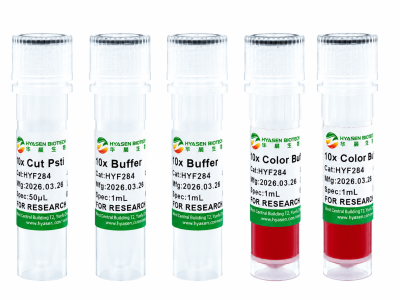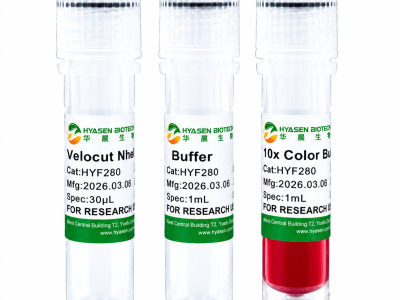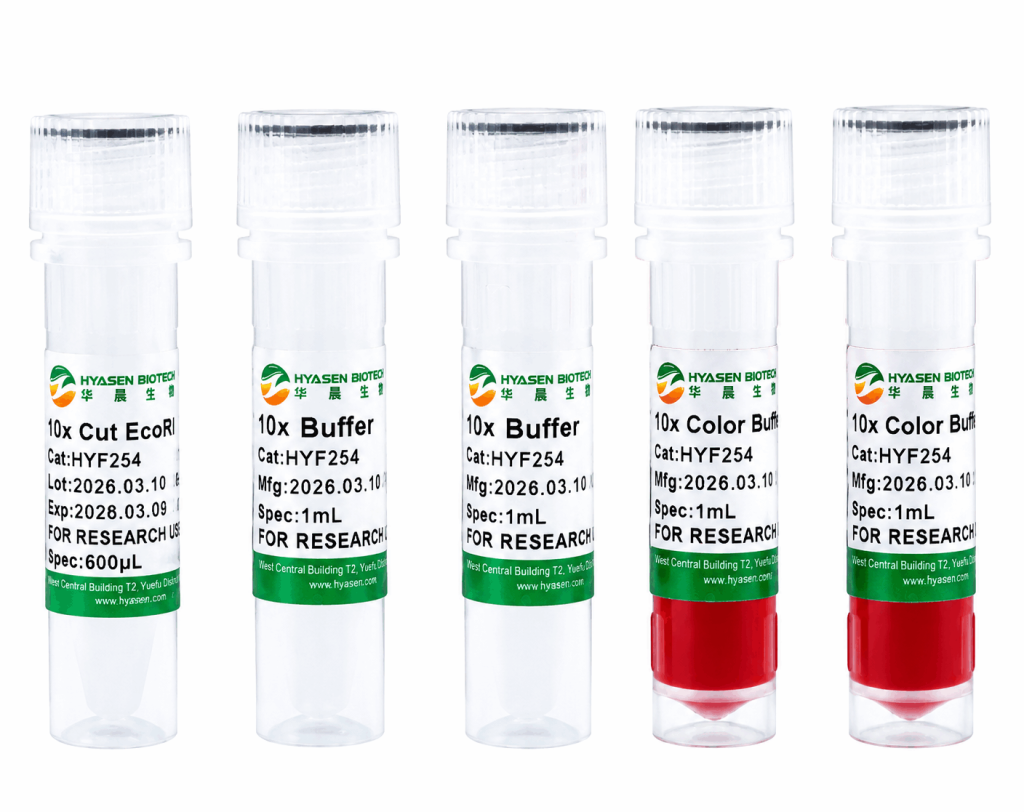
Product Overview
Velocut EcoRI is an engineered restriction endonuclease designed to simplify DNA digestion workflows in molecular biology research. As a sequence-specific DNA-cleaving enzyme, EcoRI is widely used in DNA manipulation, restriction analysis, and molecular cloning workflows that require cleavage at its recognition sites. With a digestion time of approximately 5–15 minutes under suitable reaction conditions, Velocut EcoRI helps reduce incubation time and improve workflow efficiency. Its rapid digestion performance makes it suitable for routine DNA preparation and restriction enzyme procedures where shorter reaction times are desirable.
Velocut EcoRI is compatible with universal Buffer and Color Buffer, providing flexibility for different restriction digestion workflows. This compatibility also supports the use of multiple compatible restriction enzymes in a single reaction, where the selected enzymes and reaction conditions allow simultaneous digestion. Color Buffer contains a density reagent and red and yellow tracking dyes, enabling reaction mixtures to be loaded directly onto an agarose gel after digestion without adding a separate loading dye. In a 1% agarose gel, the red dye migrates similarly to approximately 2.5 kb double-stranded DNA fragments, while the yellow dye migrates similarly to approximately 10 bp double-stranded DNA fragments. These dyes provide visual references for monitoring electrophoresis progress.
Velocut EcoRI can be incorporated into DNA digestion workflows involving plasmid DNA, genomic DNA, viral DNA, and PCR products containing the appropriate recognition sequence. Common applications include restriction analysis, molecular cloning, DNA fragment preparation, and general molecular biology research. For experiments involving multiple restriction enzymes, users should confirm that all selected enzymes are compatible with the chosen buffer and reaction conditions. The target DNA sequence and any relevant DNA modifications should also be considered when designing the digestion workflow.
Components
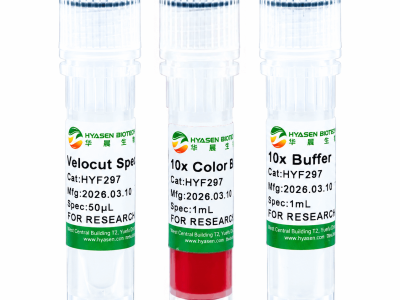
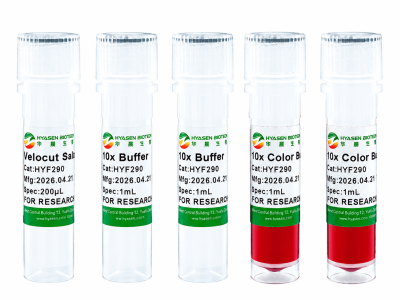
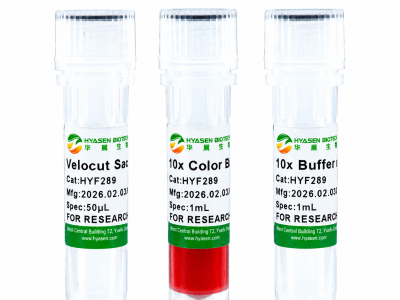
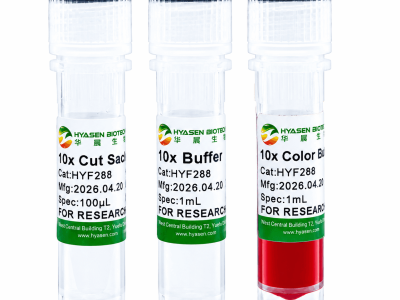
| Components | 600 rxns |
| Velocut EcoRI | 600 μL |
| 10× Buffer | 2×1 mL |
| 10× Color Buffer | 2×1 mL |
Product Features
- Rapid DNA Digestion: Designed to support DNA digestion within 5–15 minutes under suitable reaction conditions. Shorter incubation times can help streamline routine restriction digestion procedures and reduce overall workflow time.
- Compatible with Universal Buffer and Color Buffer: Compatible with universal Buffer and Color Buffer, offering flexibility in reaction setup. Color Buffer contains a density reagent and two tracking dyes, allowing digested samples to be loaded directly onto an agarose gel without adding a separate loading dye.
- Broad DNA Substrate Applications: Suitable for digestion workflows involving plasmid DNA, genomic DNA, viral DNA, and PCR products that contain the EcoRI recognition sequence. This makes Velocut EcoRI useful for DNA analysis, molecular cloning, and DNA sample preparation.
FAQ
Q1: What are the main applications of Velocut EcoRI?
Velocut EcoRI is used for sequence-specific DNA digestion in molecular biology workflows, including restriction analysis, molecular cloning, and DNA fragment preparation. It can be used with plasmid DNA, genomic DNA, viral DNA, and PCR products when the target DNA contains the appropriate EcoRI recognition site.
Q2: How long does Velocut EcoRI take to digest DNA?
Velocut EcoRI is part of an engineered restriction enzyme series designed to digest DNA in approximately 5–15 minutes under suitable reaction conditions. The actual digestion time may vary depending on the DNA substrate, enzyme amount, DNA input, and reaction setup. For optimal results, follow the product-specific protocol and recommended reaction conditions.
Q3: Can Velocut EcoRI be used with other restriction enzymes in the same reaction?
Simultaneous digestion may be possible when the selected restriction enzymes are compatible with the same buffer and reaction conditions. The rapid digestion characteristics of this enzyme series can help simplify workflows that use multiple restriction enzymes. Before combining enzymes, confirm their buffer compatibility, temperature requirements, recognition sites, and suitability for the intended DNA substrate.