Product Overview
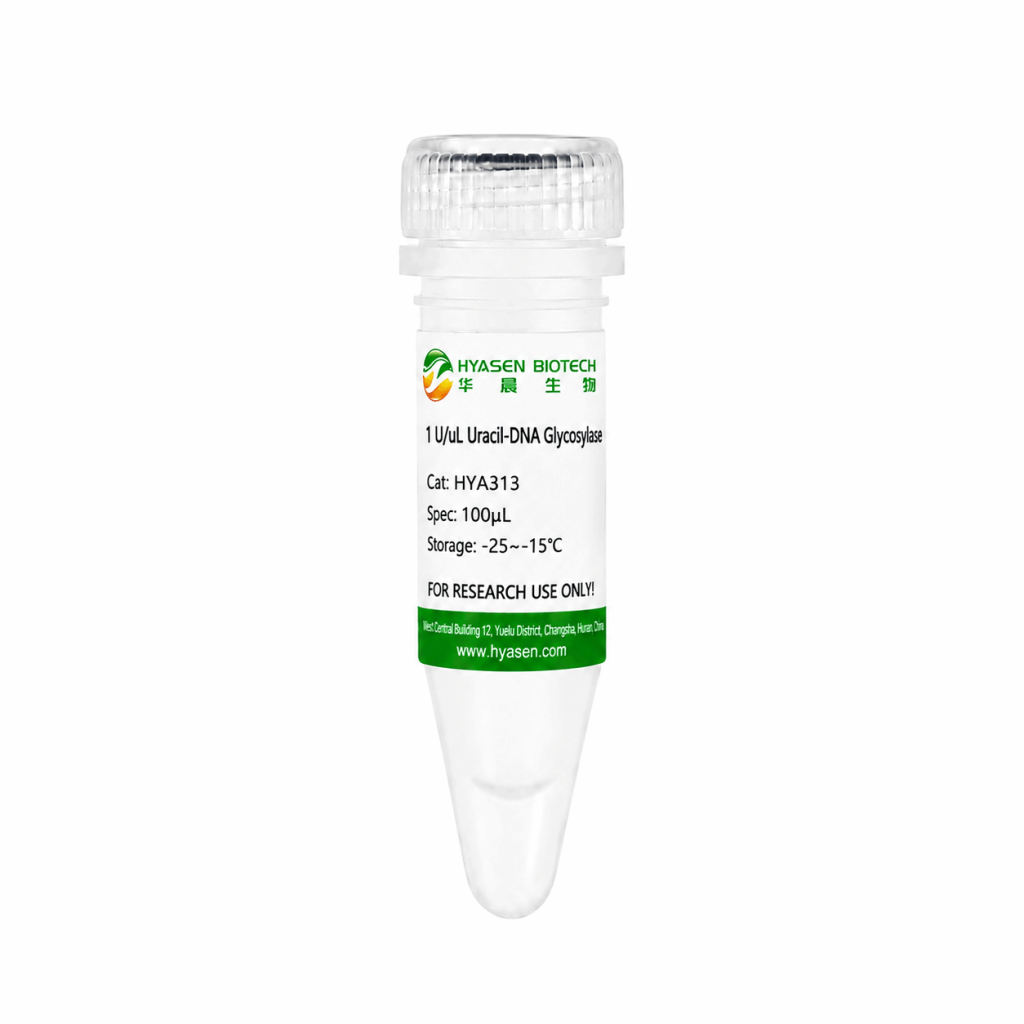
Uracil-DNA Glycosylase (UNG), also known as Uracil-DNA Glycosylase or UDG, is a DNA repair enzyme that recognizes uracil residues in DNA and removes the uracil base by hydrolyzing the N-glycosidic bond. This generates an abasic site that renders uracil-containing DNA susceptible to degradation during subsequent thermal cycling or processing. HYA313 Uracil-DNA Glycosylase is designed for use in dUTP-UNG carryover contamination prevention systems. When dUTP is incorporated into PCR products instead of, or together with, dTTP, previously amplified products become substrates for UNG. Before the next amplification reaction begins, UNG treatment helps eliminate these contaminating uracil-containing amplicons while leaving native thymine-containing DNA templates unaffected. By reducing carryover contamination from previous PCR reactions, HYA313 helps improve assay specificity, minimize false-positive results, and enhance the reliability of PCR-based detection. It is particularly suitable for qPCR master mixes, PCR diagnostic kits, high-throughput testing workflows, and molecular diagnostic reagent development.
Components
| Component | 100 U | 1000 U | 5000 U |
| 1 U/uL Uracil-DNA Glycosylase | 100 uL | 1 mL | 5 mL |
Product Features
- Effective PCR Carryover Contamination Control: HYA313 specifically recognizes and removes uracil residues from DNA, making it ideal for dUTP-containing PCR systems.
- Selective Action on Uracil-Containing DNA: UNG removes uracil residues from DNA without targeting normal thymine-containing DNA templates.
- Ideal Raw Material for PCR and qPCR Reagent Development: HYA313 can be incorporated into commercial amplification formulations that use dUTP-based contamination prevention.
FAQ
Q1: What is the main purpose of HYA313 Uracil-DNA Glycosylase in PCR?
HYA313 is mainly used to prevent carryover contamination from previous PCR reactions. In a dUTP-containing amplification system, previously generated amplicons contain uracil and can therefore be recognized by UNG before the next PCR run. UNG removes uracil residues from these contaminating DNA molecules, helping prevent them from serving as templates and reducing the risk of false-positive results.
Q2: Does UNG degrade normal genomic DNA or the original PCR template?
UNG specifically removes uracil residues from DNA. Native genomic DNA normally contains thymine rather than uracil and is therefore not the intended substrate of the dUTP-UNG carryover prevention system.
Q3: Why should UNG be used together with dUTP in PCR or qPCR?
The contamination-control strategy depends on incorporating dUTP into newly synthesized PCR products. These uracil-containing amplicons can then be selectively recognized by UNG in subsequent reactions.