Product Overview
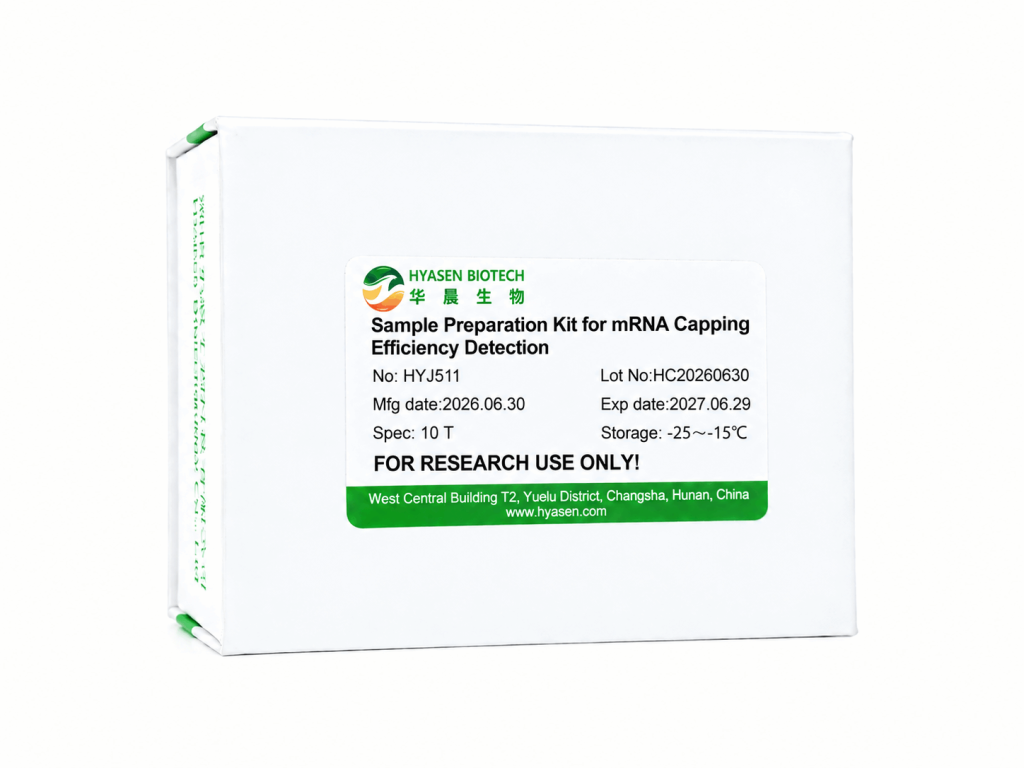
Capping efficiency is a critical quality attribute for mRNA-based vaccines and therapeutics, since a properly formed cap structure at the 5′ end of mRNA is essential for protecting the molecule from degradation and enabling efficient protein translation. Accurately measuring the proportion of correctly capped versus uncapped or improperly capped RNA is therefore a key requirement in mRNA product development and quality control. The Sample Preparation Kit for mRNA Capping Efficiency Detection streamlines this analytical workflow by enabling efficient and reproducible processing of mRNA samples ahead of LC-MS analysis. The kit supports accurate detection and quantitative assessment of both ribose-methylated (Cap 1) and ribose-unmethylated (Cap 0) cap structures, which are subsequently separated and quantified via LC-MS. Sample preparation is simplified through pre-formulated reagents, including a 4× RNase H Mix for targeted RNA fragmentation near the 5′ cap region and Streptavidin Magnetic Beads for cap fragment enrichment/purification, combined with an optimized protocol that allows LC-MS-ready samples to be prepared in as little as 1.5 hours. This kit is well suited for mRNA quality control laboratories, mRNA vaccine and therapeutic developers, and CDMOs seeking a standardized, reproducible method for capping efficiency assessment as part of release testing or process development workflows.
Components
| Components | 10 T | 50 T |
| 4×RNase H Mix | 250 μL | 5×250μL |
| Streptavidin Magnetic Beads | 500 μL | 5×500μL |
| Wash Buffer | 8×1 ml | 40×1 ml |
| Elution Buffer | 300 μL | 5×300 μL |
| mRNA Positive control(1μg/μL) | 200 μL | 5×200 μL |
| Biotin Probe Positive Control (10μM) | 100 μL | 5×100 μL |
Product Features
- Rapid sample preparation for LC-MS analysis: The optimized protocol and pre-formulated reagents enable preparation of LC-MS-ready mRNA samples in as little as 1.5 hours, significantly reducing hands-on time compared to manual, non-standardized fragmentation and enrichment methods.
- Accurate quantification of Cap 0 and Cap 1 species: The kit is specifically designed to enable clear differentiation and quantification of ribose-methylated (Cap 1) versus ribose-unmethylated (Cap 0) cap structures, supporting precise capping efficiency measurements critical for mRNA product characterization.
- Pre-formulated, ready-to-use reagent system: Includes pre-formulated 4× RNase H Mix and Streptavidin Magnetic Beads, minimizing reagent preparation variability and supporting consistent, reproducible results across sample batches and operators.
FAQ
Q1: Why is capping efficiency an important quality attribute for mRNA products, and how is it typically measured?
The 5′ cap structure protects mRNA from exonuclease-mediated degradation and is required for efficient recruitment of the translation machinery; uncapped or improperly capped mRNA is less stable and less efficiently translated, potentially reducing product efficacy. Capping efficiency is commonly assessed by fragmenting the mRNA near the 5′ end, enriching the cap-containing fragment, and analyzing the ratio of capped to uncapped (or Cap 0 to Cap 1) species using LC-MS, which offers precise, quantitative resolution of these closely related structures.
Q2: What role do the RNase H Mix and Streptavidin Magnetic Beads play in the sample preparation workflow?
The 4× RNase H Mix is used to site-specifically fragment the mRNA near the 5′ cap region using a complementary DNA oligonucleotide guide, generating a short, cap-containing RNA fragment suitable for downstream analysis. The Streptavidin Magnetic Beads are then used to enrich or purify this cap-containing fragment (via a biotinylated capture oligo), removing the bulk of the remaining RNA body and yielding a clean sample for LC-MS injection.
Q3: Can this kit distinguish between Cap 0 and Cap 1 structures, and is it suitable for quality control/release testing applications?
Yes. The kit is designed to enable accurate detection and quantitative differentiation of ribose-methylated (Cap 1) and ribose-unmethylated (Cap 0) cap species following LC-MS analysis. Its standardized, reproducible workflow makes it suitable for incorporation into mRNA quality control and release testing protocols where consistent, well-characterized capping efficiency data is required.