Product Overview
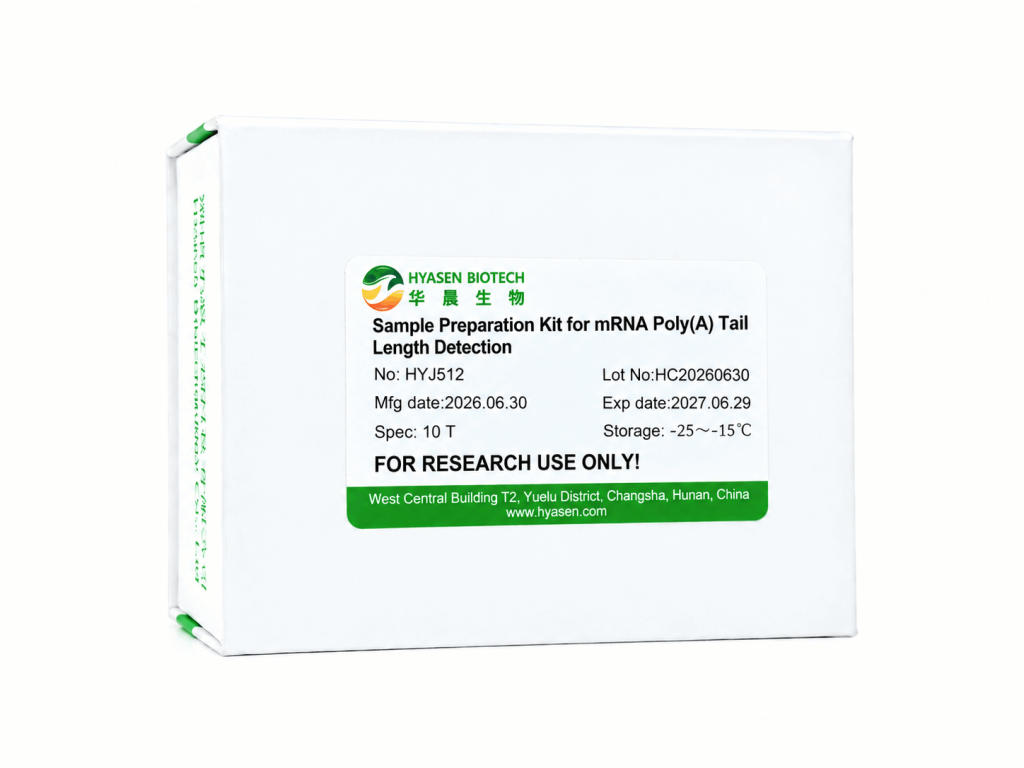
Poly(A) tail length distribution is a critical quality attribute for mRNA-based vaccines and therapeutics, as a properly sized poly(A) tail at the 3′ end of mRNA is essential for protecting the molecule from degradation and enabling efficient protein translation. Accurately characterizing tail length distribution is therefore an important requirement in mRNA product development and quality control. The Sample Preparation Kit for mRNA Poly(A) Tail Length Detection streamlines this analytical workflow by enabling efficient and reproducible processing of mRNA samples ahead of LC-MS analysis. The kit supports accurate detection and assessment of poly(A) tail length distribution through a targeted RNA fragmentation and purification workflow. Sample preparation is simplified through pre-formulated reagents, including a 10× RNase T1 Mix for site-specific RNA fragmentation to release the intact poly(A) tail fragment, along with resin, spin column, wash buffer, and elution buffer for fragment purification — combined into an optimized protocol that allows LC-MS-ready samples to be prepared in as little as 1 hour. This kit is well suited for mRNA quality control laboratories, mRNA vaccine and therapeutic developers, and CDMOs seeking a standardized, reproducible method for poly(A) tail length assessment as part of release testing or process development workflows.
Components
| Components | 10 T | 50 T |
| 10×RNase T1 Mix | 200 μL | 5×200μL |
| mRNA for positive control (1μg/μL) | 100 μL | 5×100μL |
| Wash buffer 1 | 9×1 ml | 45×1 ml |
| Wash buffer 2 | 1 ml | 5×1 ml |
| Elution buffer | 1 ml | 5×1 ml |
| Resin | 200 μL | 5×200μL |
| Spin columns | 10 pcs | 5×10 pcs |
Product Features
- Rapid sample preparation for LC-MS analysis: The optimized protocol and pre-formulated reagents enable preparation of LC-MS-ready mRNA samples in as little as 1 hour, significantly reducing hands-on time compared to manual, non-standardized fragmentation and purification methods.
- Targeted fragmentation for accurate tail length assessment: The pre-formulated 10× RNase T1 Mix enables site-specific RNA fragmentation to isolate the intact poly(A) tail fragment, supporting accurate downstream determination of tail length distribution by LC-MS.
- Streamlined spin-column purification workflow: The included resin, spin column, wash buffer, and elution buffer provide a complete, ready-to-use purification system, minimizing reagent preparation variability and supporting consistent, reproducible results across sample batches and operators.
FAQ
Q1: Why is poly(A) tail length distribution an important quality attribute for mRNA products, and how is it typically measured?
The poly(A) tail protects mRNA from 3′→5′ exonuclease-mediated degradation and supports efficient recruitment of the translation machinery; tail length and its distribution can influence mRNA stability and translational efficiency, making it an important characteristic to monitor. Tail length distribution is commonly assessed by fragmenting the mRNA to isolate the poly(A) tail region and analyzing the resulting fragment sizes using LC-MS, which offers precise, quantitative resolution of tail length heterogeneity.
Q2: What role does the RNase T1 Mix play in the sample preparation workflow, and why is this fragmentation approach used?
The 10× RNase T1 Mix site-specifically cleaves RNA at guanine residues, generating a defined fragment that includes the intact poly(A) tail. This targeted fragmentation approach isolates the tail region from the rest of the mRNA body, enabling accurate size-based or mass-based analysis of tail length distribution without interference from the coding or UTR sequences.
Q3: Is this kit suitable for quality control and release testing applications in mRNA manufacturing?
Yes. The kit’s standardized, reproducible workflow — combining targeted fragmentation with spin-column purification — supports consistent, well-characterized poly(A) tail length data suitable for incorporation into mRNA quality control and release testing protocols, as well as process development and formulation studies.