Product Overview
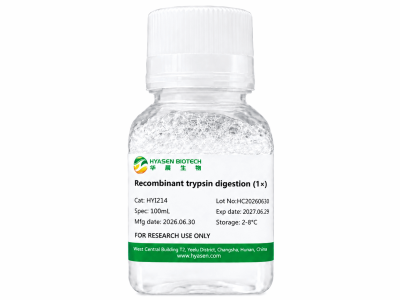
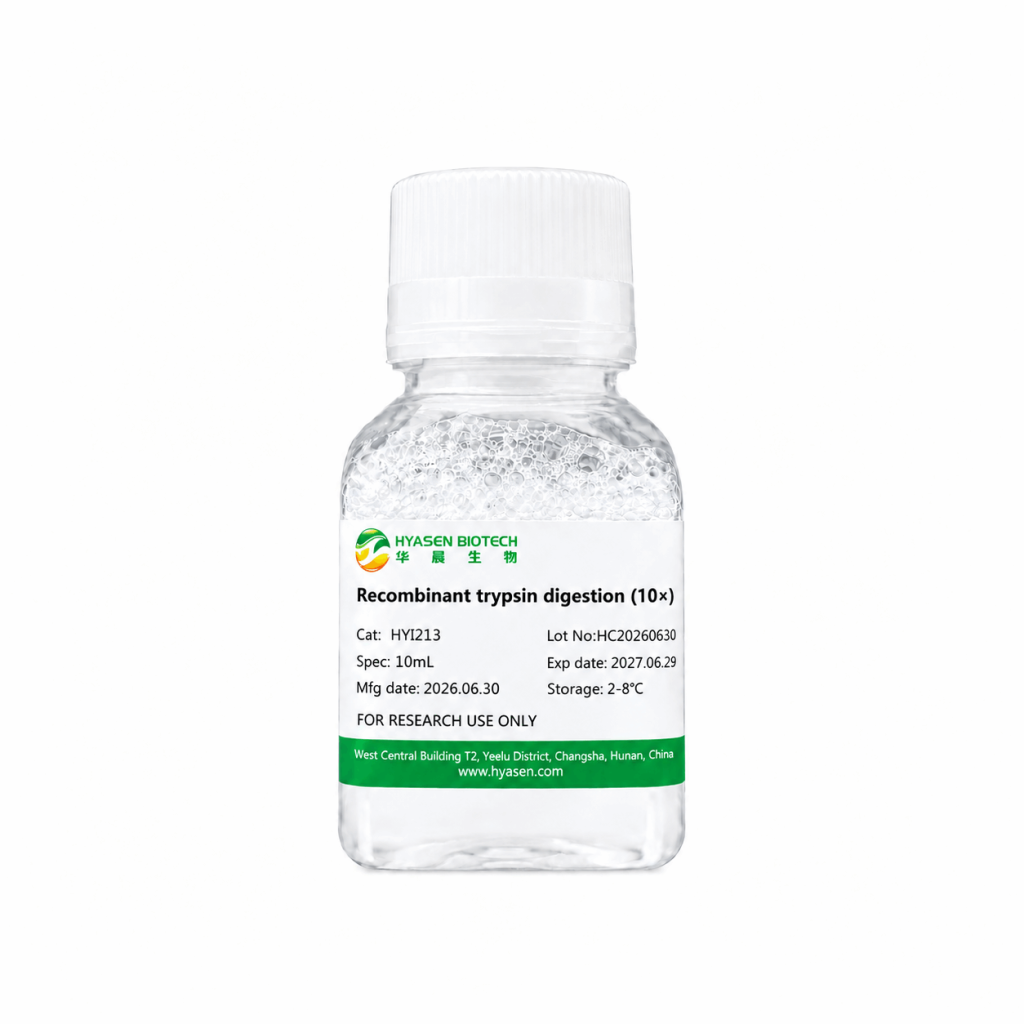
Recombinant Trypsin Digestion (10×) is a concentrated recombinant trypsin digestion reagent designed for biopharmaceutical cell culture and CMC process applications. The product is based on recombinant trypsin and is formulated with EDTA without phenol red. Its 10× concentration allows users to prepare the required working concentration according to their cell type and process requirements, making it suitable for both process development and larger-scale cell-processing workflows.
Components
| Components | Size-1 | Size-2 | Size-3 |
| Recombinant trypsin digestion (10×) | 10mL | 100mL | 500mL |
Product Features
- 10× concentrated formulation
- Recombinant and animal-origin-free
- Contains EDTA, No phenol red
- Storage at 2–8°C, 12-month expiration under specified storage conditions
FAQ
Q1: Why does this trypsin digestion solution include EDTA, and how does it improve cell dissociation?
EDTA is a calcium and magnesium chelator that disrupts divalent cation-dependent cell adhesion molecules, such as cadherins, which help hold cells together and to culture surfaces. By chelating these ions, EDTA works synergistically with trypsin’s proteolytic cleavage of adhesion proteins, resulting in more efficient and complete cell detachment during passaging or harvest.
Q2: Why is this product formulated without phenol red?
Phenol red, while commonly used as a pH indicator in cell culture media, has been shown to exhibit weak estrogenic activity and can interfere with certain hormone-sensitive cell assays or spectrophotometric measurements. Formulating this trypsin solution without phenol red avoids these potential confounding effects, making it more suitable for applications where such interference must be minimized.
Q3: How does this recombinant trypsin solution compare to traditional animal-derived trypsin for cell culture applications?
This solution provides a functionally equivalent alternative to traditional porcine- or bovine-derived trypsin, produced instead through microbial fermentation to eliminate animal-origin raw materials. This addresses adventitious agent risk and supply chain considerations relevant to regulated applications such as immune cell therapy, vaccine manufacturing, and other cell-based biologics production, while maintaining the proteolytic cell dissociation performance expected from standard trypsin digestion solutions.