Product Overview
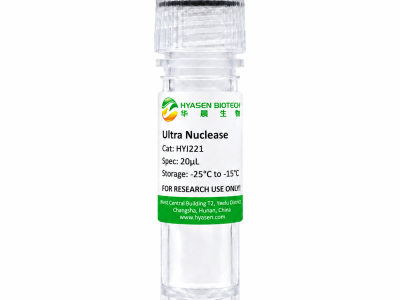
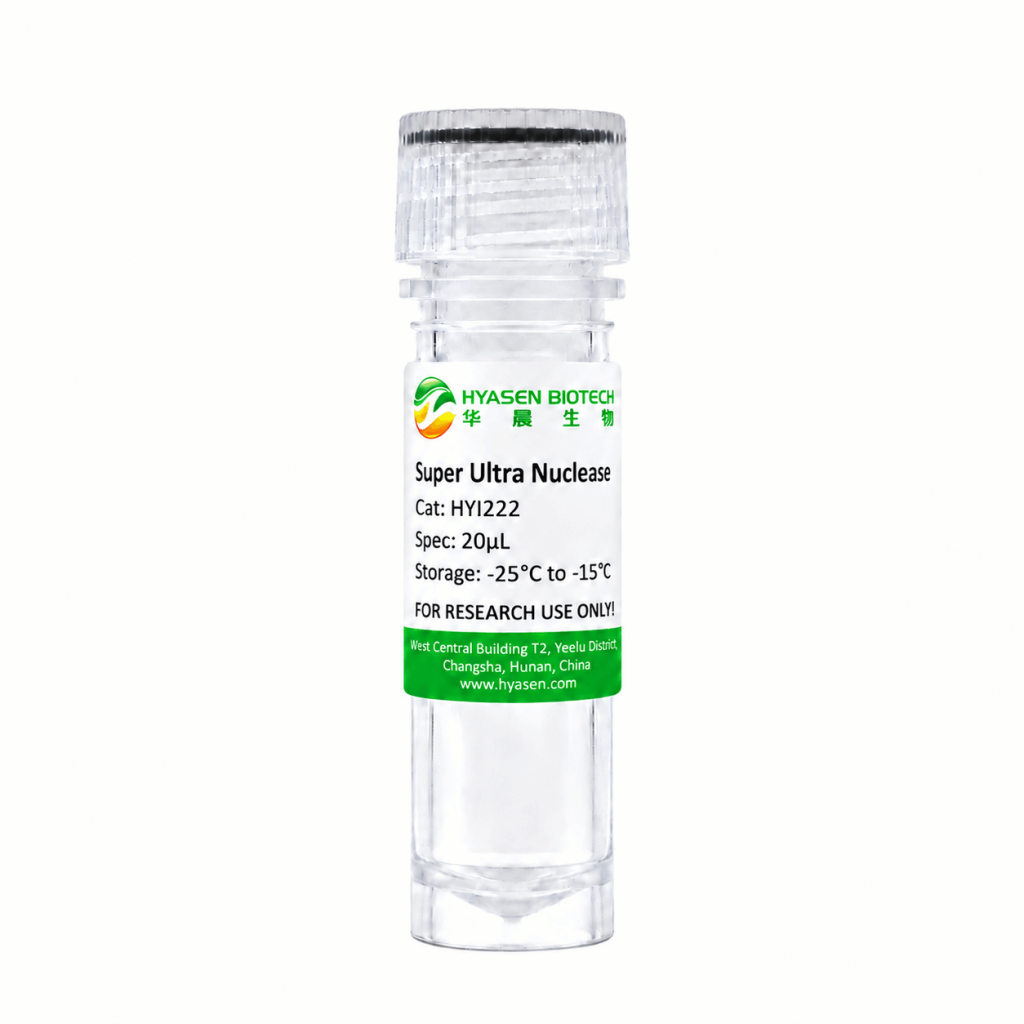
Super Ultra Nuclease is a genetically engineered endonuclease derived from Serratia marcescens, capable of degrading DNA or RNA — whether double- or single-stranded, linear or circular — under a broad range of reaction conditions. The enzyme comprehensively degrades nucleic acids down to short 5′-monophosphate oligonucleotides of just 3–5 bases in length, ensuring thorough clearance of nucleic acid contaminants rather than partial fragmentation. Following genetic engineering modification, Super Ultra Nuclease is fermented, expressed, and purified in E. coli. A key practical benefit of this enzyme is its ability to significantly reduce the viscosity of cell supernatants and cell lysates in research and bioprocessing applications, while also improving protein purification efficiency and supporting more effective downstream functional research. A key differentiator of Super Ultra Nuclease is its tag-free formulation — unlike some nuclease preparations that carry an affinity tag (such as His-tag) for purification purposes, this enzyme contains no tags at all. This makes it particularly well suited for use with tagged recombinant protein preparations, where a tagged nuclease could otherwise co-purify with the target protein during affinity chromatography (e.g., if both share a His-tag), potentially contaminating the final product or complicating tag-based purification and downstream tag removal steps. Beyond general research use, Super Ultra Nuclease serves as a residual host nucleic acid removal reagent across a range of biomanufacturing applications, including gene therapy vector production, viral purification, vaccine manufacturing, and protein and polysaccharide pharmaceutical production.
Components
| Components | 5 KU | 50KU | 500KU | 5000KU |
| Ultra Nuclease | 20μL | 200μL | 2mL | 20mL |
Product Features
- Tag-free design for tagged recombinant protein workflows: Unlike tagged nuclease alternatives, Super Ultra Nuclease contains no affinity tags, avoiding co-purification issues when used alongside tagged recombinant target proteins — particularly valuable when the target protein carries the same tag type (e.g., His-tag) commonly used in nuclease products.
- Comprehensive nucleic acid degradation: Super Ultra Nuclease degrades all forms of DNA and RNA — double- or single-stranded, linear or circular — down to short 5′-monophosphate oligonucleotides of just 3–5 bases, ensuring thorough clearance rather than partial fragmentation of residual nucleic acids.
- Effective viscosity reduction for downstream processing: By efficiently degrading nucleic acids in cell supernatants and lysates, this enzyme significantly reduces sample viscosity, easing handling during filtration, centrifugation, and chromatography steps, and improving overall purification efficiency.
FAQ
Q1: Why does the tag-free design of this nuclease matter for recombinant protein purification?
Many nuclease products carry an affinity tag, such as a His-tag, to facilitate their own purification. However, when working with a tagged recombinant target protein that shares the same tag type, a tagged nuclease can co-purify alongside the target protein during affinity chromatography, introducing a contaminating protein that may be difficult to separate from the product of interest. Because Super Ultra Nuclease contains no tags at all, this co-purification risk is eliminated, making it a cleaner choice for nucleic acid removal in tagged protein production workflows.
Q2: What types of nucleic acid substrates can Super Ultra Nuclease degrade?
Super Ultra Nuclease is active on DNA and RNA in all common structural forms — double-stranded, single-stranded, linear, and circular — degrading them completely into short 5′-monophosphate oligonucleotides of 3–5 bases in length, ensuring comprehensive removal of diverse nucleic acid contaminants.
Q3: In what types of biomanufacturing processes is Super Ultra Nuclease commonly used?
Super Ultra Nuclease is commonly used as a host residual nucleic acid removal reagent in gene therapy vector production, viral vector and vaccine purification, and protein or polysaccharide pharmaceutical manufacturing — with its tag-free design offering a particular advantage in workflows involving tagged recombinant protein products.