Product Overview
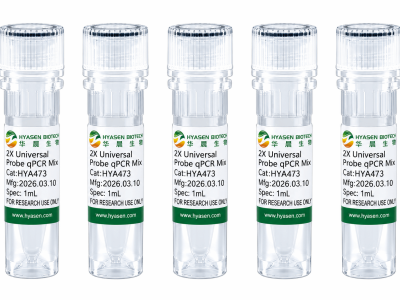
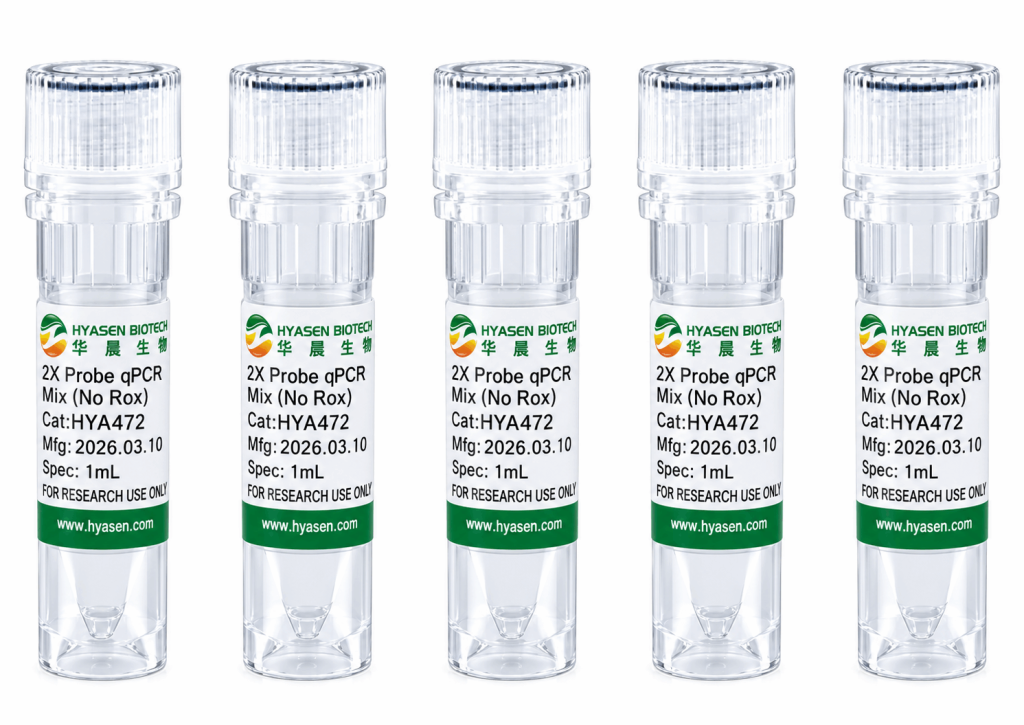
The HYA472 2X Probe qPCR Mix (No ROX) is designed for probe-based quantitative PCR applications, including TaqMan probe assays for DNA detection and gene expression analysis using cDNA templates. Its 2X premix formulation contains the essential qPCR components, except primers and DNA or cDNA templates, helping streamline reaction preparation and reduce hands-on steps.
The hot-start Taq DNA polymerase system supports controlled amplification and helps improve reaction specificity. With no ROX reference dye added, this mix is intended for qPCR instruments that do not require ROX normalization. Confirm the reference dye requirements of your instrument before use.
For storage, keep the mix at -20°C protected from light. After thawing, it can be stored at 4°C protected from light for up to one month, according to the product specifications. Minimize repeated freeze-thaw cycles.
Product Features
- Optimized for Probe-Based qPCR: Designed for TaqMan probe assays, supporting real-time fluorescence detection with DNA or cDNA templates.
- Convenient 2X Premix Formulation: Contains the core qPCR components in a ready-to-use mix, reducing reaction setup steps. Primers and DNA or cDNA templates are added separately.
- No ROX Reference Dye: Suitable for qPCR instruments that do not require ROX normalization, simplifying reagent selection for compatible platforms.
FAQ
1. What applications is the 2X Probe qPCR Mix (No ROX) designed for?
It is designed for probe-based real-time PCR, including TaqMan assays using DNA or cDNA templates for target detection and gene expression analysis.
2. Does this mix contain ROX reference dye?
No. The formulation does not include ROX reference dye. Before use, verify that your qPCR instrument does not require ROX normalization.
3. How should the mix be stored?
Store at -20°C protected from light for long-term storage. After thawing, the mix can be stored at 4°C protected from light for up to one month. Avoid repeated freeze-thaw cycles whenever possible.