Product Overview
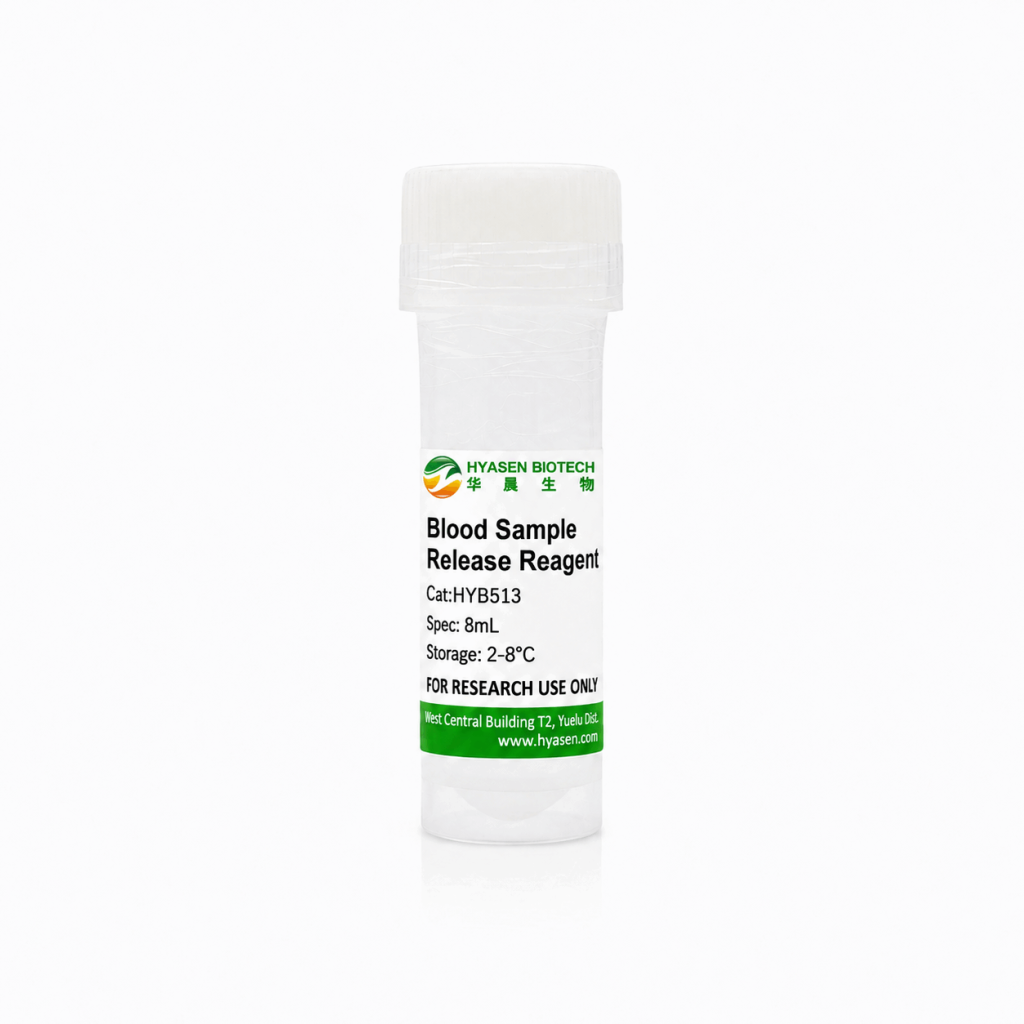
Hyasen Blood Sample Release Reagent HYB513 is designed for blood sample preparation in molecular diagnostic applications. It aims to simplify nucleic acid release from blood specimens and support downstream molecular detection workflows. By streamlining sample processing, this reagent can support the development of simplified nucleic acid amplification assays, including LAMP and PCR-based molecular diagnostic applications, subject to compatibility validation. It is intended for molecular diagnostic developers, IVD manufacturers, and laboratories seeking convenient blood sample preparation solutions for molecular testing.
Components
| Components | Size-1 | Size-2 | Size-3 |
| Blood Sample Release Reagent | 8 mL | 100 mL | 1000 mL |
Product Features
- Simplified Blood Sample Preparation: Designed to simplify blood sample processing for molecular diagnostic applications, helping streamline sample preparation before downstream nucleic acid detection.
- Supports Extraction-Free Workflows: Designed to support simplified sample preparation without conventional nucleic acid extraction and purification steps, subject to compatibility with the downstream assay.
- Designed for Molecular Diagnostic Applications: Suitable for evaluation in molecular diagnostic workflows, including LAMP- and PCR-based assay development, depending on the validated application.
FAQ
Q1: What is Blood Sample Release Reagent used for?
Blood Sample Release Reagent is a sample preparation solution designed to facilitate nucleic acid release from whole blood samples for molecular diagnostic applications. It supports simplified, extraction-free sample preparation and helps streamline downstream nucleic acid amplification workflows.
Q2: Does blood sample contain substances that may inhibit LAMP or PCR amplification?
Yes. Whole blood contains components such as hemoglobin and other cellular substances that may interfere with nucleic acid amplification. The sample input volume and amplification conditions should therefore be optimized to minimize potential inhibition and maintain reliable detection performance.