Product Overview
Isolating cells from dense or connective tissue-rich samples often requires breaking down the extracellular matrix (ECM), which holds cells together and provides structural support. Collagen is a major component of this matrix, and its degradation is an important step in many tissue dissociation protocols.
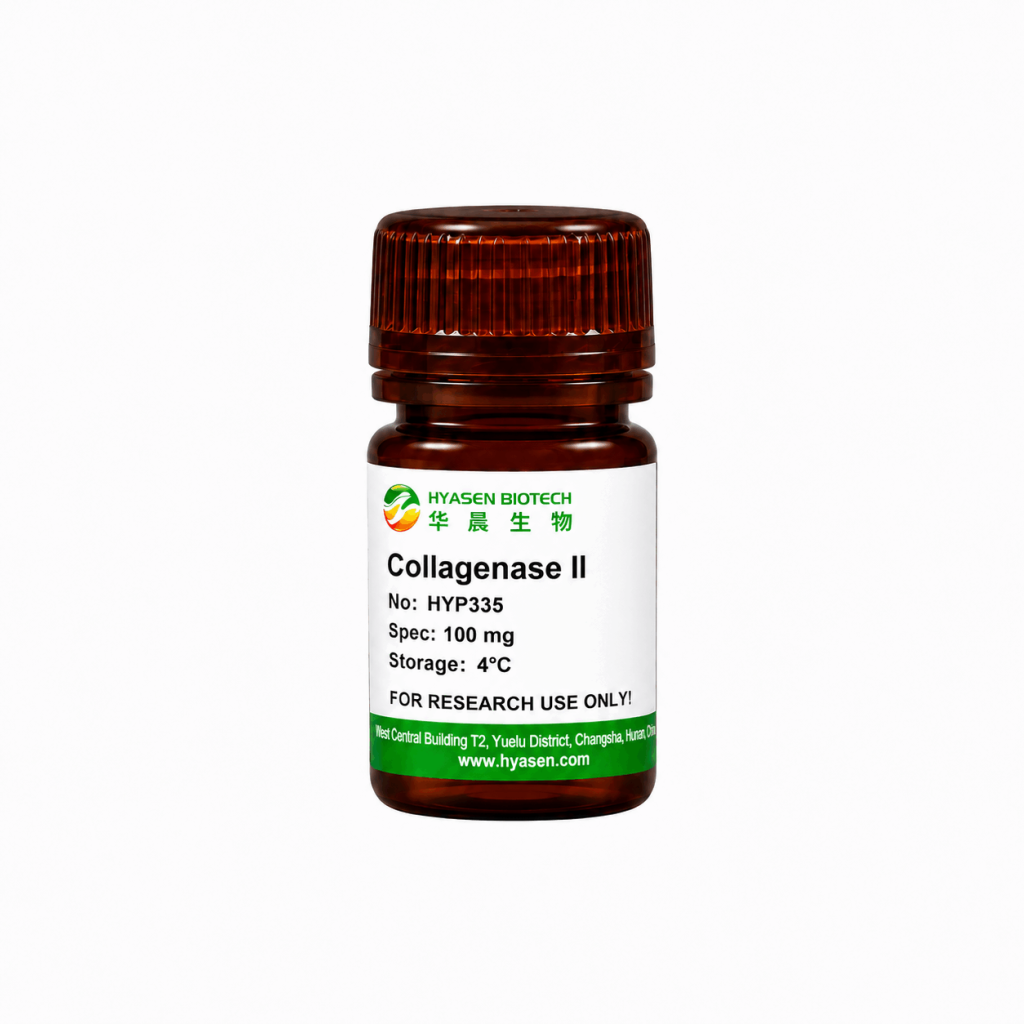
Hyasen HYP335 Collagenase II is a proteolytic enzyme preparation derived from Clostridium histolyticum. It breaks down native collagen, including its triple-helical structure, by cleaving peptide bonds within collagen-rich sequences such as Pro-X-Gly-Pro. This enzymatic activity helps loosen the extracellular matrix and release cells from surrounding tissue.
With a collagenase activity of ≥125 U/mg solid, the enzyme is suitable for dissociating a variety of tissues, including heart, thyroid, salivary gland, liver, bone, and cartilage. It is particularly useful in tissue processing workflows where collagen breakdown is needed to prepare cell suspensions for primary cell isolation and culture.
Collagenase II can be incorporated into tissue-specific digestion protocols, with enzyme concentration and incubation conditions adjusted according to the tissue type and desired cell population. Proper optimization helps balance effective tissue dissociation with the preservation of cell integrity.
HYP335 Collagenase II is available in 100 mg and 1 g sizes for laboratory tissue dissociation and cell isolation applications.
Product Features
- Effective Digestion of Native Collagen: Degrades native triple-helical collagen in the extracellular matrix, helping break down connective tissue structures and release cells during enzymatic dissociation.
- Suitable for Dense and Connective Tissue-Rich Samples: Supports the dissociation of heart, thyroid, salivary gland, liver, bone, and cartilage tissues, making it useful for primary cell isolation and tissue processing.
- Collagenase Activity ≥125 U/mg Solid: Provides a specified collagenase activity of at least 125 U/mg solid for enzymatic tissue digestion and cell dissociation workflows.
FAQ
Q1: What types of tissues can Collagenase II be used to dissociate?
HYP335 Collagenase II is suitable for dissociating heart, thyroid, salivary gland, liver, bone, and cartilage tissues. By breaking down collagen in the extracellular matrix, it helps release cells for primary cell isolation and subsequent laboratory studies. Digestion efficiency and cell recovery depend on tissue composition, sample preparation, and reaction conditions.
Q2: What is the difference between Collagenase I and Collagenase II?
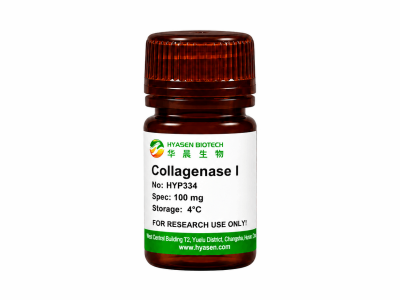
Both enzymes are derived from Clostridium histolyticum and are used to digest collagen during tissue dissociation. However, Collagenase I and Collagenase II preparations differ in their relative proteolytic activity profiles and typical tissue applications. Collagenase I is commonly selected for epithelial, lung, adipose, and adrenal tissues, while Collagenase II is often used for heart, thyroid, bone, cartilage, and salivary gland tissues. The most suitable enzyme depends on the tissue type and the cells being isolated.
Q3: How should Collagenase II be stored and prepared for tissue dissociation?
HYP335 Collagenase II should be stored at 4°C, protected from light, and has a stated shelf life of 2 years under the recommended storage conditions. For tissue digestion, dissolve the enzyme in an appropriate buffer or cell culture medium according to the experimental protocol. The working concentration, incubation time, and digestion conditions should be optimized for the tissue type and target cells.