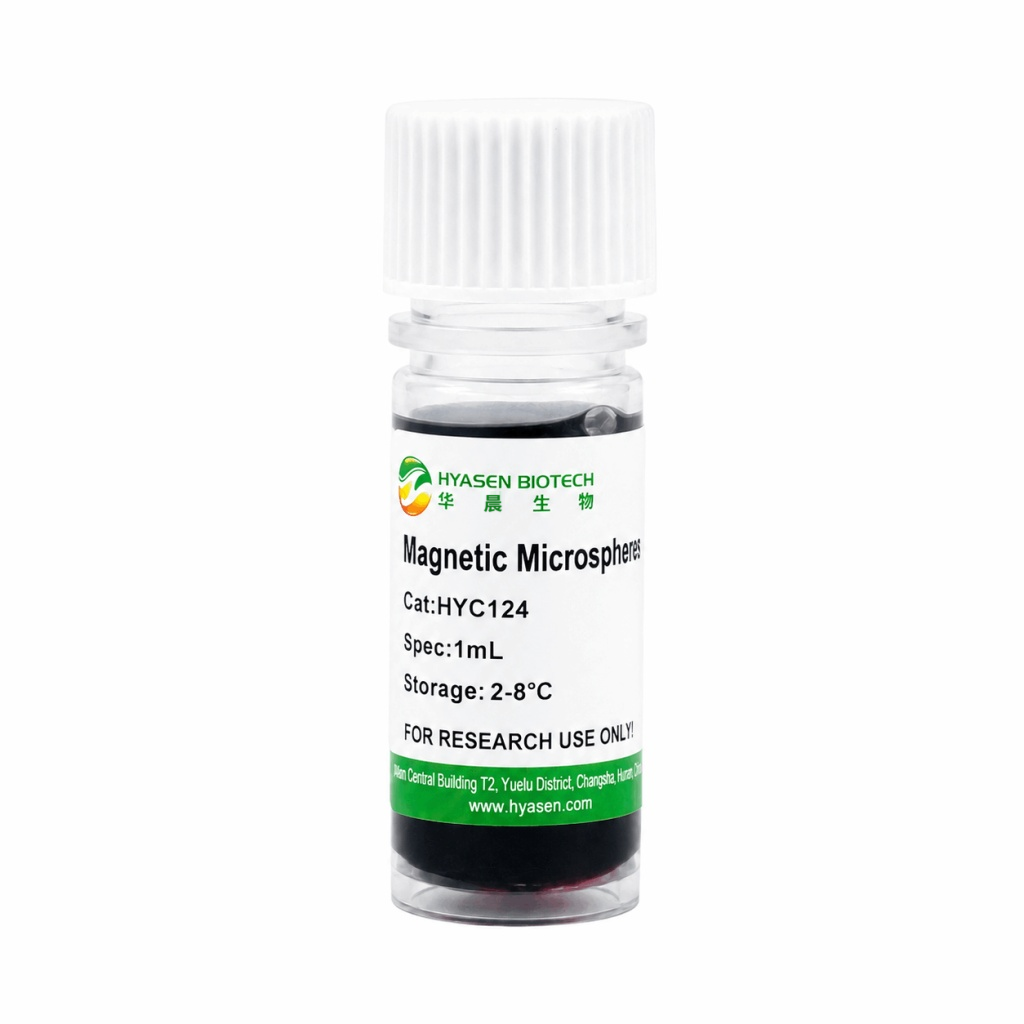
Product Overview
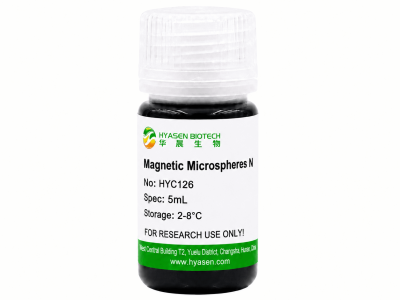
Magnetic bead-based nucleic acid purification uses nano- to micron-scale superparamagnetic materials as the matrix, typically black ferroferric oxide or yellow-brown ferric oxide, with a surface coating of functional groups that bind nucleic acids. The three most common types are carboxyl-containing, hydroxyl-containing, and silanol-containing magnetic beads, with silica-based (silanol-containing) beads being the most widely used. Their nucleic acid adsorption principle is the same as the classic glass milk purification technology or glass fiber filter membrane method, providing a well-established binding mechanism. Magnetic Microspheres are polydisperse, fast-binding silica magnetic beads built on this silanol-based principle. Each bead has a ferroferric oxide core (60%) for magnetic responsiveness and a silica surface coating (40%) for nucleic acid binding, combining reliable magnetic separation with the proven adsorption chemistry of silica-based purification. This product can be used across a range of nucleic acid applications, including plasmid extraction, gel DNA recovery, PCR/enzymatic product purification, genomic DNA and RNA extraction, and viral nucleic acid extraction — making it a flexible raw material for developing or manufacturing magnetic bead-based extraction kits.
Components
| Components | Size-1 | Size-2 | Size-3 |
| Magnetic Microspheres (100mg/ml) | 5mL | 100mL | 380mL |
Product Features
- Proven silanol-based binding chemistry: The silica surface coating relies on the same silanol-based nucleic acid adsorption principle as classic glass milk or glass fiber filter purification methods, providing a well-established and predictable binding mechanism.
- Balanced core-shell composition: A ferroferric oxide core (60%) provides strong magnetic responsiveness for efficient separation, while a silica surface coating (40%) delivers reliable nucleic acid binding capacity.
- Versatile across nucleic acid applications: The beads are suitable for plasmid extraction, gel DNA recovery, product purification, genomic DNA and RNA extraction, and viral nucleic acid extraction, supporting a broad range of kit development and manufacturing needs.
FAQ
Q1: What is the composition of these magnetic beads, and how does it affect performance?
Each bead has a ferroferric oxide core, accounting for 60% of the bead, and a silica surface coating, accounting for 40%. The ferroferric oxide core provides the superparamagnetic property needed for magnetic separation, while the silica coating provides the silanol groups responsible for nucleic acid binding.
Q2: How does silica-based nucleic acid binding work?
Silica-coated beads adsorb nucleic acids through silanol groups on their surface, following the same principle used in classic glass milk purification and glass fiber filter membrane methods. This is one of the most established and widely used nucleic acid binding chemistries in extraction technology.
Q3: What nucleic acid applications are these beads suitable for?
The beads can be used for plasmid extraction, gel DNA recovery, product purification, genomic DNA and RNA extraction, and viral nucleic acid extraction, making them applicable across a wide range of nucleic acid purification workflows.