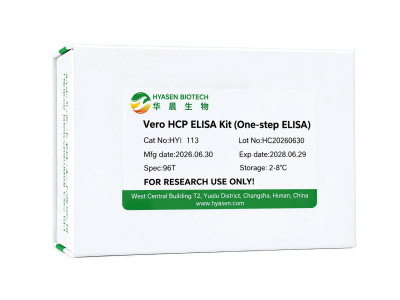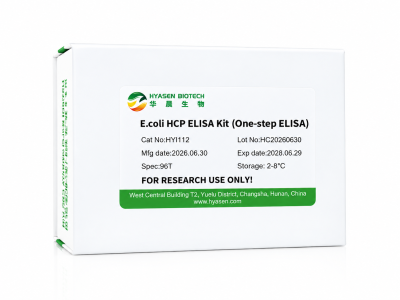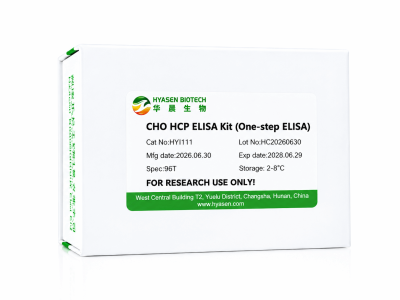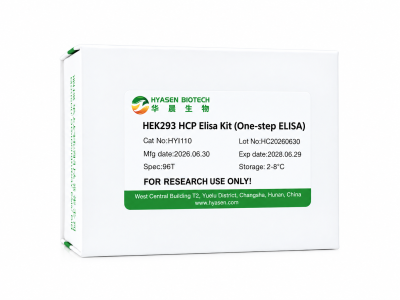
Product Overview
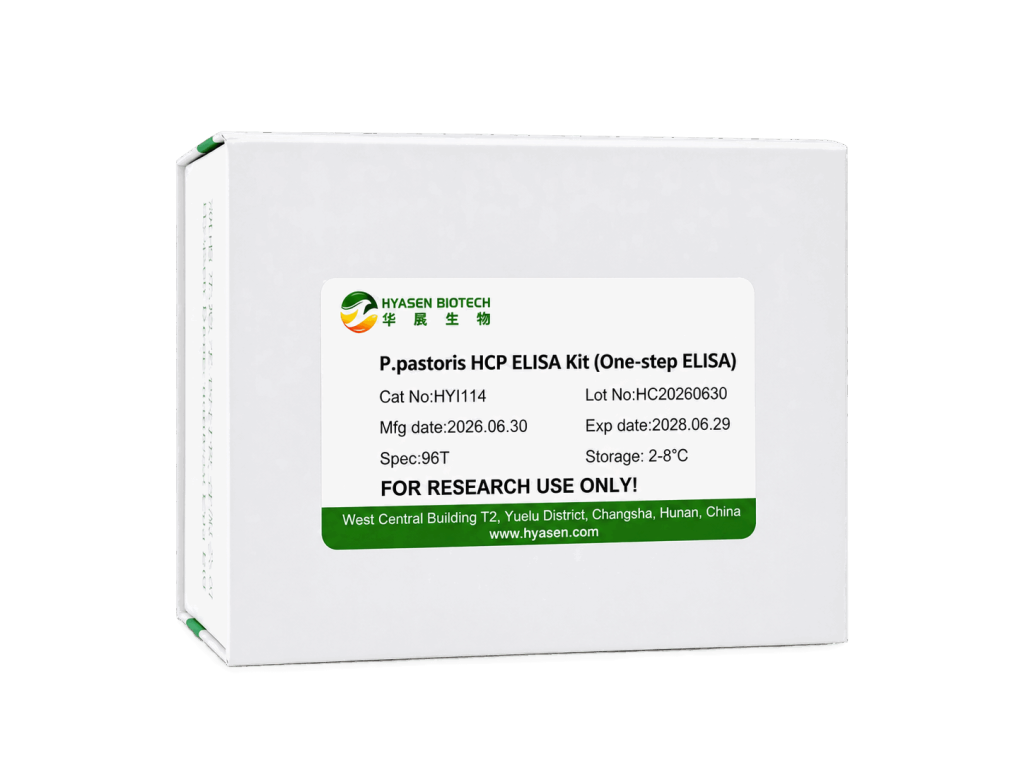
The Pichia pastoris HCP ELISA Kit is designed for quantitative detection of residual HCPs from Pichia pastoris expression systems, including commonly used strains such as GS115 and X33. Pichia pastoris is widely used as a yeast expression platform for recombinant proteins and enzymes. During fermentation and downstream purification, residual host cell proteins may remain in process samples and biological products. The kit uses a one-step double-antibody sandwich ELISA format for quantitative residual HCP analysis. It supports testing of upstream expression samples, downstream purification samples, drug substances and finished formulations, subject to sample suitability verification.
Components
| Reagent | Quantity | Notes |
| HEK293 HCP Calibration Standard | 3 bottles | Lyophilized powder. Dissolve it with 500 μLReconstitution Solution and let it stand for about 5 minutes until transparent. Please refer to the bottle label for details. |
| Anti-HEK293 HCP Microtiter Strips | 8 well ×12 strips | Strips pre-coated with sheep (Ovis aries) anti-HEK293 HCP affinity antibody in a vacuumed bag withdesiccant. Seal and store immediately after use. |
| Reconstitution Solution | 2×1.5 mL | Only used to dissolve HEK293 HCP Calibration Standard. |
| Diluent | 2×25 mL | For dilution of Calibration Standard,Anti-HEK293:HRP (100×) and samples. |
| Wash Buffer Concentrate(10×) | 1×25 mL | Dilute 10 times with freshly prepared ultra-pure water for plate washing. |
| Anti-HEK293:HRP (100×) | 1×120 μL | Affinity purified sheep antibody conjugated to HRP. Dilute 100 times with Diluent before use. |
| TMB Substrate | 1×12 mL | Equilibrate to room temperature for 20minutes before use. Keep away from light and sealed |
| Stop Solution | 1×6 mL | Avoid direct contact with eyes, skin, and clothing. |
| Sealing Film | 3 pieces | Cover the strips with it during incubation to prevent contamination and liquid evaporation. |
Product Features
- Linearity & Range: 2-200 ng/mL.
- LLOQ: 2 ng/mL.
- Specificity: No cross-reactivity with E.coli, CHO and Sf9 cells, cross-reactivity less than 1% with Saccharomyces cerevisiae and Hansenula polymorpha.
FAQ
Q1: What is the quantitative range?
The quantitative range is 2–200 ng/mL, with an LLOQ of 2 ng/mL.
Q2: What samples can be tested?
Upstream expression samples, downstream purification process samples, drug substances and finished formulations, subject to sample suitability.