Product Overview
PNGase F-Fast is an improved formulation of PNGase F developed for laboratories that need to accelerate N-glycan release from therapeutic antibodies and other glycoproteins. Conventional PNGase F workflows may require extended incubation before released N-glycans can be subjected to labeling, chromatography or mass spectrometry. Incomplete deglycosylation can potentially affect the observed glycan distribution. PNGase F-Fast is designed to shorten this sample preparation step, enabling rapid N-glycan release and subsequent glycan analysis.Under the recommended one-step protocol, 100 μg of antibody is treated with PNGase F-Fast at 50°C for 10 minutes. For antibodies that require an additional denaturation step, the two-step protocol uses 80°C for 2 minutes, followed by 50°C for 10 minutes.
Components
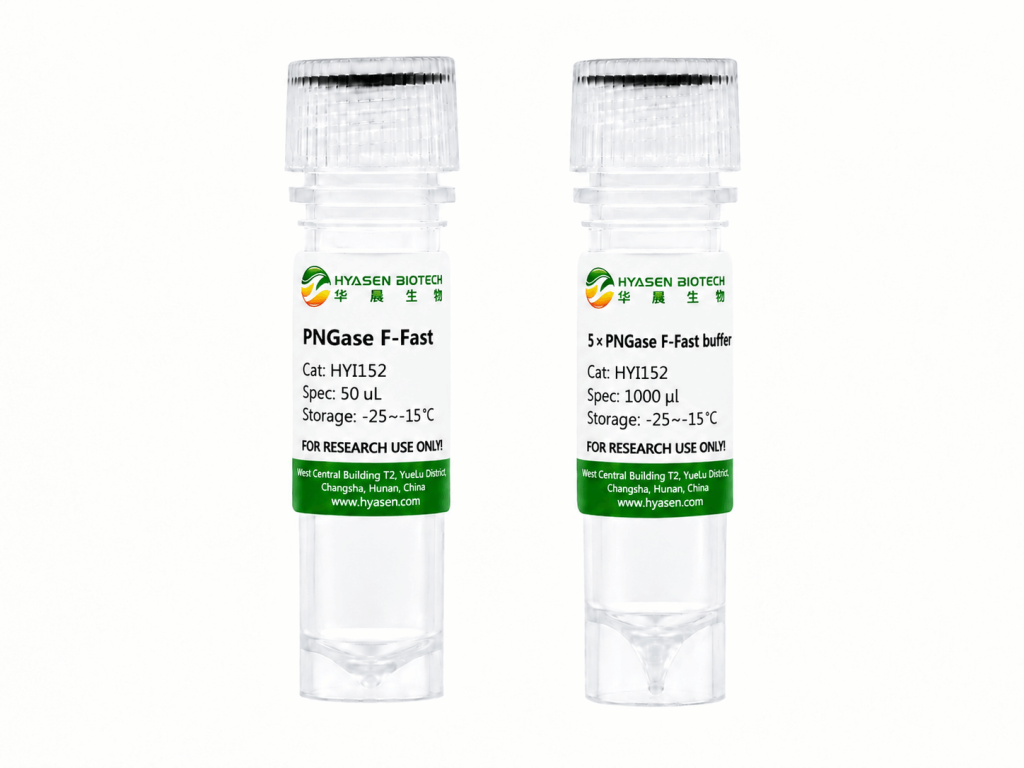
| Components | Size |
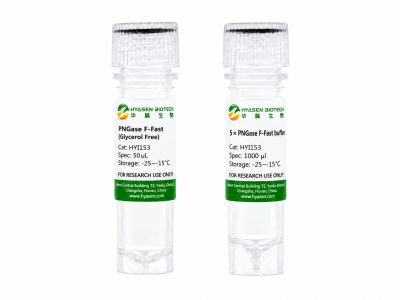
| PNGase F-Fast | 50 µl |
| 5 × PNGase F-Fast buffer | 1000 µl |
Product Features
- Rapid N-Glycan Release:Designed to release antibody N-glycans within minutes, with a recommended 10-minute digestion at 50°C.
- Broad N-Glycan Release:Designed to rapidly release N-glycans from glycoproteins while maintaining the released oligosaccharide structure.
- Low Undesired Enzyme Activity:No detectable exoglycosidase, Endoglycosidase F1/F2/F3, Endoglycosidase H or protease activity is reported.
FAQ
Q1: What is the difference between PNGase F and PNGase F-Fast?
The main difference is reaction speed and workflow positioning. Standard PNGase F is designed for routine glycoprotein deglycosylation, with a recommended 37°C, 60-minute digestion. PNGase F-Fast is optimized for rapid antibody and fusion-protein deglycosylation, with a recommended 50°C, 10-minute digestion.
Q2: Does the accelerated reaction time compromise completeness of N-glycan release?
No. PNGase F-Fast is specifically designed to release all N-glycans quickly without bias, meaning the accelerated timeline does not come at the cost of incomplete deglycosylation. This is an important distinction, since incomplete release with standard reagents (e.g., due to shortened reaction times) can introduce bias that misrepresents the antibody’s true glycan composition.
Q3: Why is rapid, unbiased N-glycan release particularly important for therapeutic antibody manufacturing?
Accurate, timely N-glycan distribution data is essential for effective in-process control during antibody manufacturing, where glycosylation patterns can affect product efficacy, stability, and immunogenicity. Faster, unbiased deglycosylation supports quicker turnaround for glycoprofile monitoring throughout process development and quality control, without sacrificing the accuracy needed for reliable decision-making.