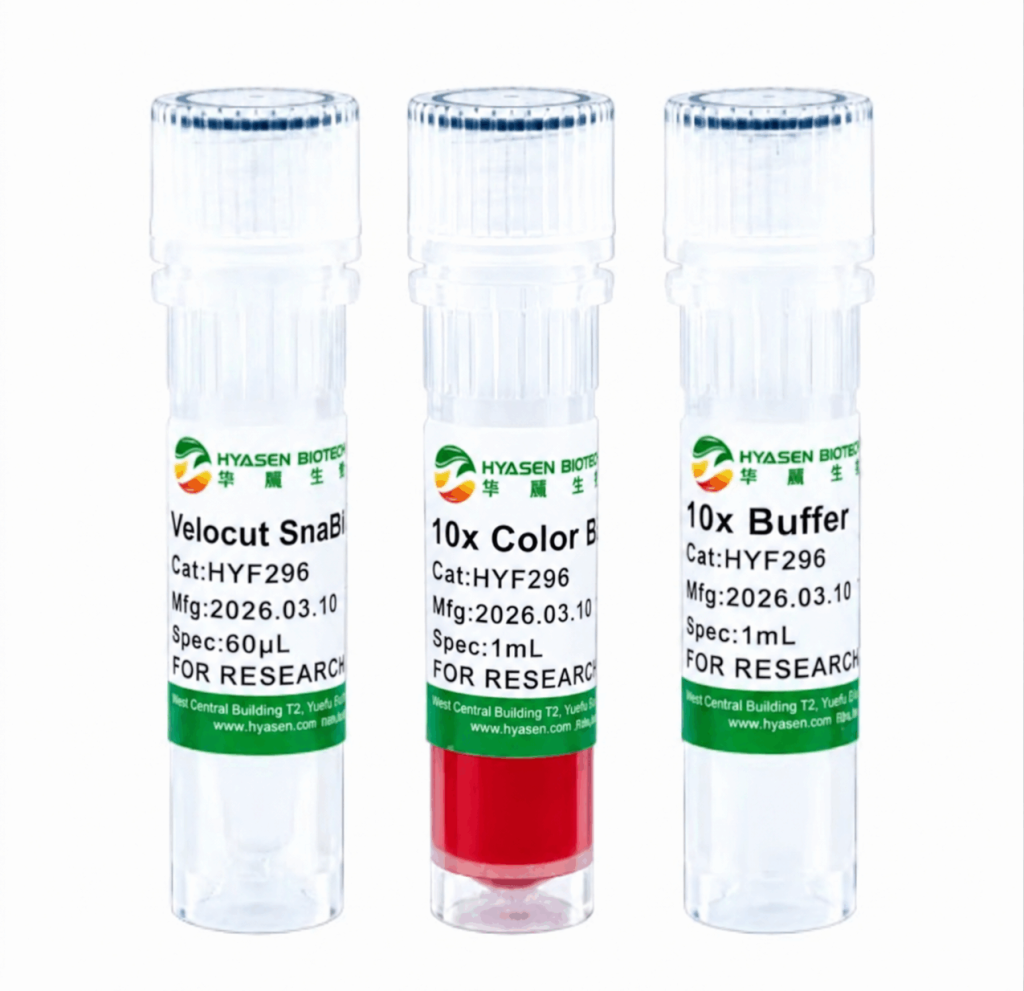
Product Overview
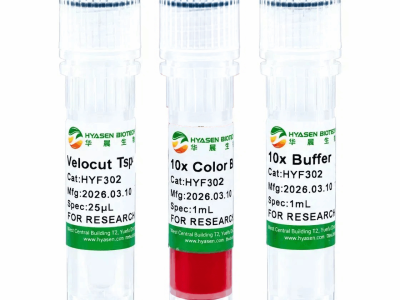
Velocut SnaBI is a recombinant restriction endonuclease designed for rapid DNA digestion in molecular biology workflows. It is suitable for plasmid DNA, PCR products, and genomic DNA containing the SnaBI recognition site. Under the recommended conditions with 1× reaction buffer at 37°C, digestion can typically be completed in 5–15 minutes.
The supplied color reaction buffer contains red and yellow tracking dyes, allowing digested DNA samples to be loaded directly onto agarose gels without adding a separate loading dye. In a 1% agarose gel, the red dye migrates similarly to approximately 2,500 bp double-stranded DNA, while the yellow dye migrates similarly to approximately 10 bp double-stranded DNA.
Velocut SnaBI can be heat-inactivated at 80°C for 20 minutes. Cleavage of CpG-methylated DNA may be inhibited, so the methylation status of the DNA template should be considered when planning digestion.
Product Features
- Rapid DNA Digestion: Enables digestion in 5–15 minutes at 37°C, supporting efficient restriction workflows involving plasmid DNA, PCR products, and genomic DNA containing the target recognition site.
- Direct Gel Loading: The supplied color reaction buffer contains red and yellow tracking dyes, allowing direct agarose gel loading and convenient monitoring of electrophoresis progress.
- Heat Inactivation and Methylation Awareness: Can be heat-inactivated at 80°C for 20 minutes. CpG methylation may inhibit DNA cleavage, making template methylation status an important consideration during experimental planning.
FAQ
Q1: How long does Velocut SnaBI take to digest DNA?
Velocut SnaBI typically completes digestion in 5–15 minutes at 37°C using the recommended 1× reaction buffer. Follow the recommended rapid digestion protocol for reaction setup.
Q2: Can Velocut SnaBI be heat-inactivated after digestion?
Yes. Velocut SnaBI can be heat-inactivated by incubation at 80°C for 20 minutes.
Q3: Does CpG methylation affect Velocut SnaBI activity?
Cleavage of CpG-methylated DNA may be inhibited. Consider the methylation status of the DNA template when planning restriction digestion.