Product Overview
Hyaseq rRNA Depletion Kit (Plant) utilizes RNase H-mediated digestion to selectively deplete ribosomal RNA (rRNA) from plant-derived total RNA, including cytoplasmic 18S and 25S rRNA, mitochondrial 18S and 26S rRNA, and chloroplast 16S and 23S rRNA, while preserving messenger RNA (mRNA) and other non-coding RNAs. The kit delivers efficient rRNA depletion from both intact and partially degraded total RNA samples. The resulting RNA can be used for high-throughput sequencing of mRNA and non-coding RNA, significantly increasing the proportion of informative sequencing reads. It is also suitable for cDNA synthesis and other downstream applications.
Components
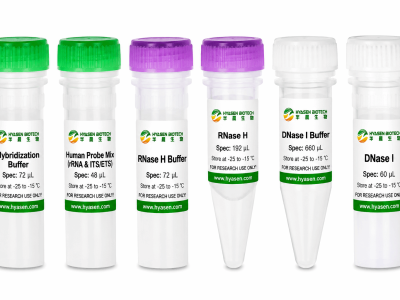
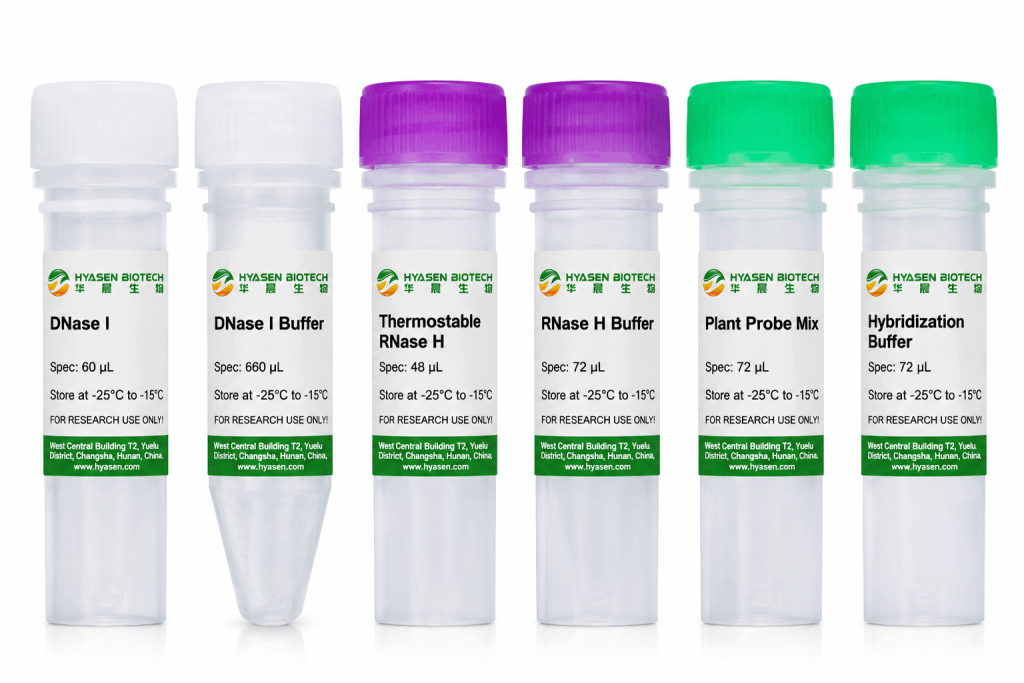
| Components | 24 T | 96 T |
| Hybridization Buffer | 72 μL | 288 μL |
| Plant Probe Mix | 72 μL | 288 μL |
| RNase H Buffer | 72 μL | 288 μL |
| Thermostable RNase H | 48 μL | 192 μL |
| DNase I Buffer | 660 μL | 2×1320 μL |
| DNase I | 60 μL | 240 μL |
Product Features
- Broad Plant Sample Coverage: Supports a wide range of plant samples with low residual rRNA levels.
- Highly Efficient rRNA Depletion: Utilizes RNase H-mediated enzymatic digestion for efficient ribosomal RNA removal.
- Excellent Compatibility: Compatible with total RNA library preparation kits from any manufacturer.
Storage Conditions
Store at -25°C to -15°C. Shelf life: 1 year.
FAQ
Q1: What is this kit used for?
The kit removes ribosomal RNA from plant total RNA while retaining mRNA and other non-coding RNAs for transcriptome sequencing and downstream analysis.
Q2: How does the kit remove rRNA?
Plant-specific probes hybridize to target rRNA, which is then digested by RNase H. DNase I treatment and RNA purification complete the workflow.
Q3: Which plant samples are supported?
Validated species include Arabidopsis, rice, wheat, maize, cotton, tomato, and potato. Applications include total RNA extracted from plant roots, seeds, and leaves. Performance in untested species should be evaluated.
Q4: What is the recommended RNA input amount?
The standard protocol specifies 100 ng–1 µg of total RNA per reaction. Use this range for routine workflows; lower-input samples require additional validation.