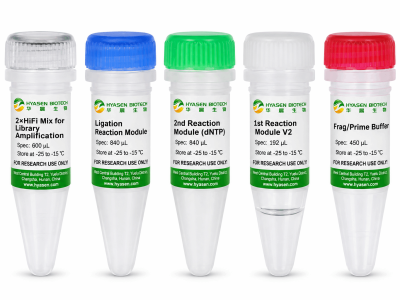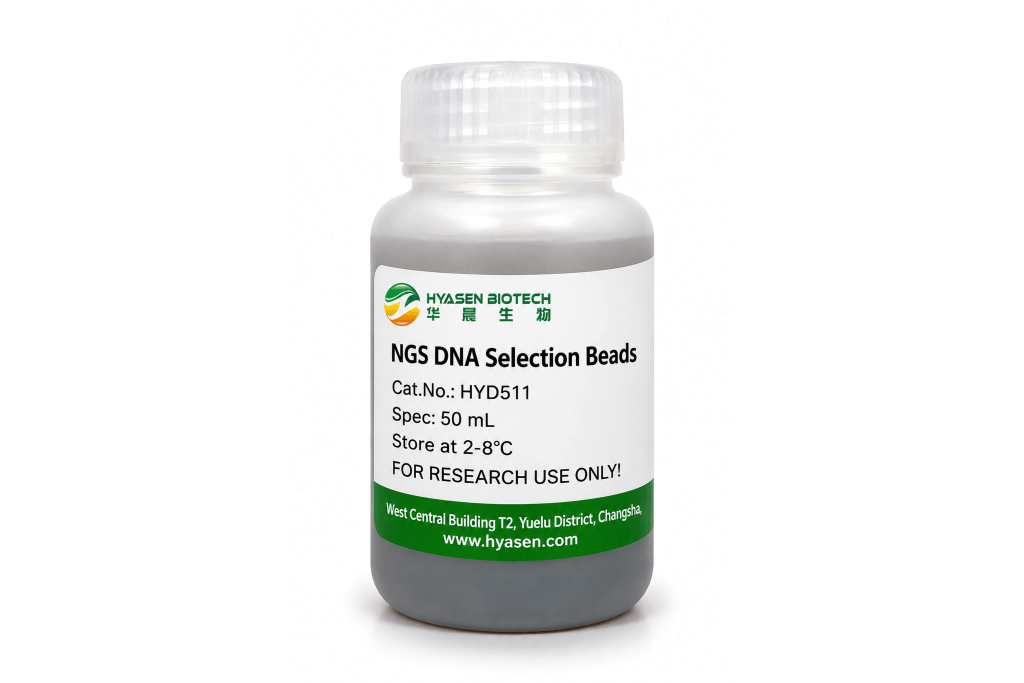
Product Overview
NGS DNA Selection Beads are based on the SPRI (Solid Phase Reversible Immobilization) technology and feature a carefully optimized buffer system for DNA fragment size selection and purification during next-generation sequencing (NGS) library preparation. The beads are compatible with DNA and RNA library preparation kits from various manufacturers. They follow the same workflow as the widely used AMPure XP Beads, delivering highly comparable DNA fragment recovery efficiency and library size distributions.
Components
| Components | Size-1 | Size-2 | Size-3 |
| NGS DNA Selection Beads | 1 mL | 5 mL | 60 mL |
Product Features
- Premium Quality: Manufactured using high-quality raw materials to ensure consistent product quality and reliable performance.
- Seamless Replacement: Based on the same underlying principle and workflow as AMPure XP Beads, delivering highly comparable experimental results.
- Broad Compatibility: Compatible with DNA and RNA library preparation kits from virtually all major manufacturers.
- Batch-to-Batch Consistency: Subjected to rigorous batch performance and stability testing to ensure consistent quality and reliable results.
Storage Conditions
Store at 2-8°C. Shelf life: 18 months.
FAQ
Q1: What are these beads used for?
The beads support DNA cleanup and size selection during NGS library preparation. They are compatible with DNA purification steps in various DNA and RNA library workflows.
Q2: How do the beads work?
The beads use solid-phase reversible immobilization (SPRI) technology to bind DNA under specific buffer conditions. Magnetic separation enables washing, followed by DNA elution.
Q3: What DNA fragment sizes can be purified?
The manufacturer recommends HYD511 for DNA fragments of approximately 150 bp or longer. For shorter fragments, select a product specifically validated for their recovery.
Q4: What causes low DNA recovery?
Common causes include incomplete mixing, an unsuitable bead ratio, insufficient incubation, bead loss, excessive drying, or incomplete elution. Review these steps when troubleshooting.