Product Overview
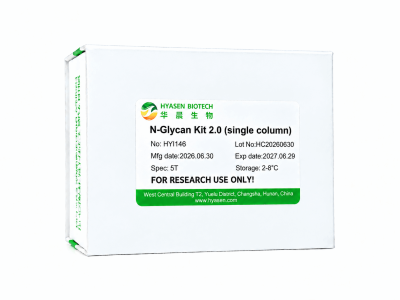
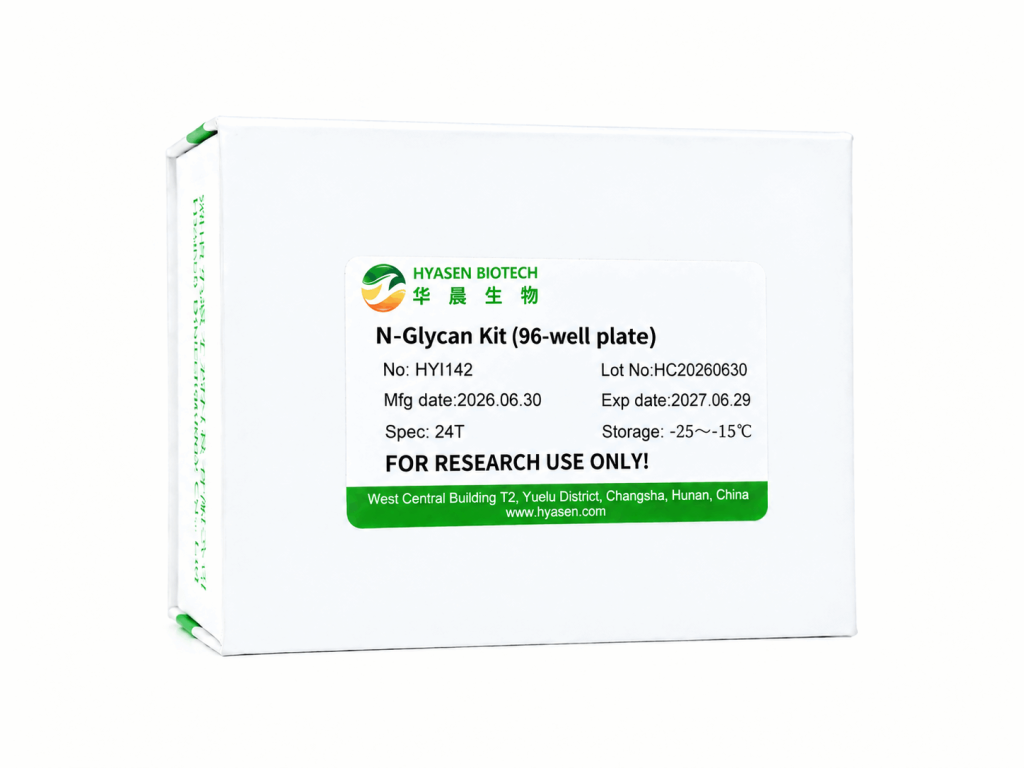
The N-Glycan Kit (96-well plate) is designed for laboratories that need a more efficient and scalable approach to N-glycan sample preparation. The kit integrates rapid enzymatic deglycosylation, glycan labeling and 96-well plate-based cleanup into a standardized workflow. Instead of processing each sample through an individual SPE column, samples can be processed in parallel using the supplied 96-well elution plate and collection components. The protocol is validated using monoclonal antibodies and has also been tested with a wide range of other N-linked glycoproteins. The workflow includes PNGase F digestion, rapid glycan labeling and plate-based SPE cleanup, followed by HILIC-FLR analysis.
Components
| Module | Reagent | 24 T | 96 T |
| Deglycosylation Module | IgG | 1.2 mg | 5 mg |
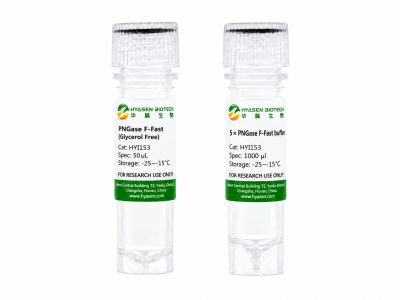
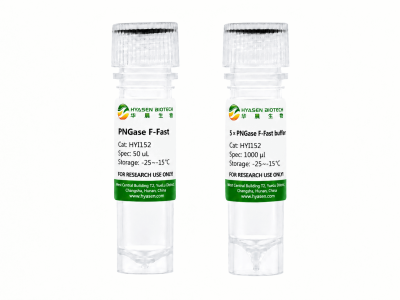
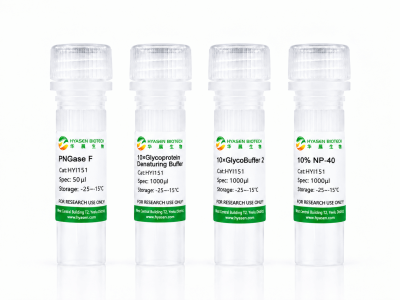
| PNGase F | 45µL | 150 µL | |
| PNGase F buffer | 0.5mL | 1 mL | |
| Surfactant | 1.2mg*6 | 3.6 mg*8 | |
| Labeling Module | MS reagent powder | 8.2mg*3 | 24.6mg*4 |
| Anhydrous DMF | 1mL | 1mL | |
| Clean-upModule | Elution Plate (96 well) | 1 piece | 1 piece |
| Elution Buffer | 5mL* 1 | 5mL*4 | |
| Sample Diluent | 5mL* 1 | 5mL*4 | |
| Collection Module | 8-tube Strips (200μL) | 100 pieces | 100 pieces |
| 8-cap Strips | 100 pieces | 100 pieces | |
| Collection plate(96 well) | 1 pieces | 1 pieces | |
| Waste tray | 1 pieces | 1 pieces |
Product Features
- 96-well plate format for higher-throughput processing: The clean-up module uses a 96-well elution plate processed via negative or positive pressure, enabling parallel purification of multiple samples in a single run — significantly increasing throughput compared to single-column processing for laboratories handling larger sample batches.
- Rapid enzymatic release and labeling workflow: PNGase F-based deglycosylation requires only minutes of enzymatic incubation, and glycan labeling proceeds at room temperature in just 5 minutes — significantly faster than many conventional overnight glycan release protocols, enabling same-day sample-to-data turnaround even at plate scale.
- HILIC-FLR-MS compatible with validated resolution: The workflow is compatible with HILIC-FLR(-MS) analysis using a Glycan BEH Amide column and validated gradient conditions, demonstrated to resolve a comprehensive IgG N-glycan profile — including fucosylated, galactosylated, and sialylated glycan species — supporting both fluorescence-based quantitation and MS-based structural confirmation.
FAQ
Q1: What equipment is needed to process the 96-well plate clean-up step?
The clean-up step requires a 96-well-plate negative pressure or positive pressure processor to drive sample and buffer flow through the elution plate wells, along with an SPE vacuum pump if applicable. This plate-based format allows all wells to be processed in parallel, rather than requiring sequential single-column handling.
Q2: Is this kit only validated for IgG/monoclonal antibodies, or can it be used with other glycoproteins?
The protocol has been validated using monoclonal antibodies and has also been tested to perform on a wide range of other N-linked glycoproteins. However, enzymatic release efficiency can vary depending on glycoprotein structure and glycosylation site accessibility, so users are advised to confirm enzymatic release performance for their specific sample type before routine use.
Q3: What analytical instrumentation is required to analyze samples processed with this kit?
Labeled, purified glycans are designed for analysis via HILIC-FLR (fluorescence detection) or HILIC-FLR-MS, using a Glycan BEH Amide column (e.g., 130 Å, 1.7 μm, 2.1 × 150 mm) with the validated gradient method provided in the manual. The published method parameters are based on an ACQUITY RDa LC-MS system; users working with other UPLC/HPLC or MS platforms can adjust parameters accordingly while maintaining the same general chromatographic principles.