Lyophilized reagents need the right diluent, volume, and handling to perform as intended after reconstitution. Mistakes can affect qPCR quantification cycle (Cq) values, LAMP amplification, or the reliability of color-based results.
Freeze-dried formats can make reagent storage and assay setup more convenient, but adding liquid is still an important step. The amount you add, how you mix, and what you do with the reconstituted material can all affect assay performance. A good-looking bead does not guarantee a good reaction.
This guide covers seven handling mistakes worth checking, the differences between qPCR and LAMP readouts, and practical ways to troubleshoot poor results. If you’re new to dried amplification formats, start with our overview of lyophilized reagents in molecular diagnostics.
Key takeaways
- Follow the product protocol. Diluent, reaction volume, mixing, and any wait time depend on the formulation; a general procedure is not a substitute for the validated instructions.
- Complete dissolution matters, but appearance is not enough. Use appropriate controls to confirm that the reconstituted reagent still performs as expected.
- Compare the right readout. qPCR uses Cq values; real-time fluorescent LAMP may use time to positivity, while colorimetric LAMP typically uses a specified endpoint color change.
- Check the entire setup before blaming the bead. Template quality, contamination, pipetting, and reaction conditions can cause problems that resemble reconstitution failure.
The point is simple: how a dried reagent is brought back into solution can make or break an assay. That is why the formulation itself matters — and Hyasen’s lyophilized LAMP bead is a concrete example.
A Freeze-Dried LAMP Examplea
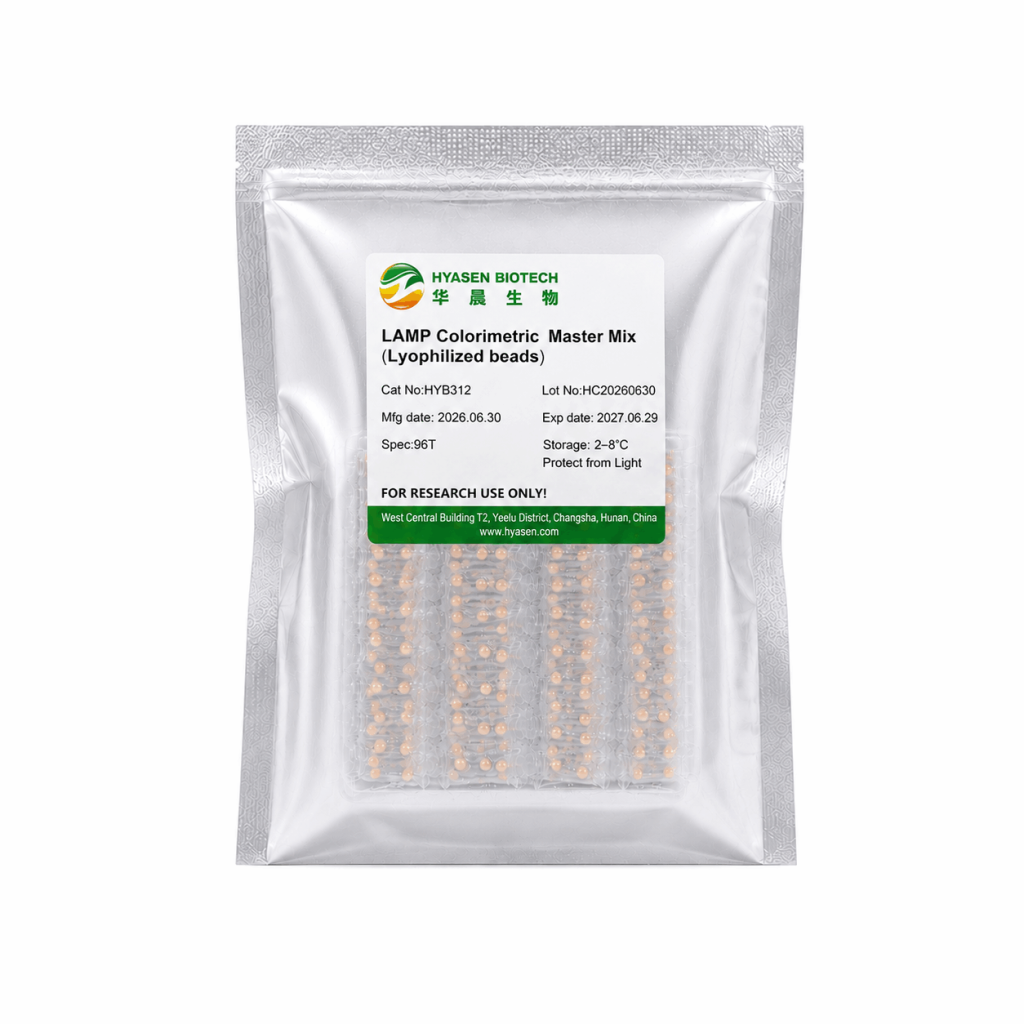
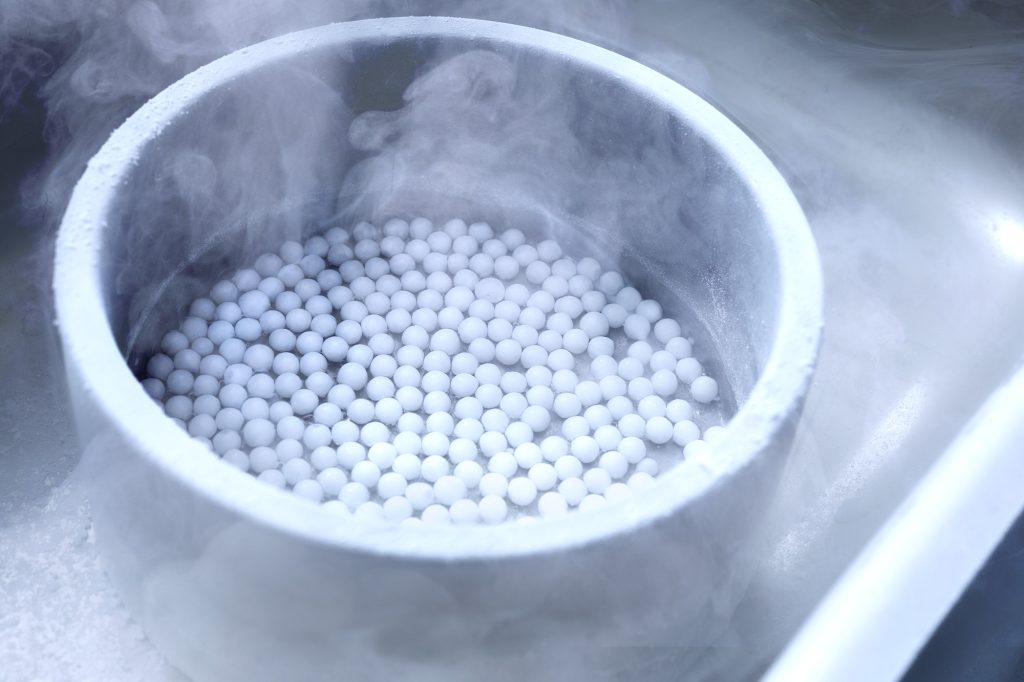
For assay developers working with dried amplification formats, a ready-to-use LAMP bead is a useful example of why reconstitution details matter. Hyasen LAMP Colorimetric Master Mix (Lyophilized Beads), HYB312 contains Bst DNA polymerase, buffer components, lyoprotectants, and a colorimetric detection system in a freeze-dried format. Its listed storage condition is 2–8°C for 12 months. Primers and template are added according to the product instructions.
Unlike qPCR, this product uses a visual red-to-yellow endpoint rather than a Cq measurement. Its pH-based readout also makes sample-buffer compatibility important. While each assay has its own requirements, HYB312 illustrates why diluent choice, consistent reaction setup, and full reconstitution deserve attention.
Request QuoteWhy Reconstitution of Lyophilized Reagents Matters
With that example in mind, let’s look more closely at why reconstitution has this much influence on your results.
Freeze-drying removes much of the water from a reagent formulation. To use it again, the dried material must dissolve into a solution with the intended composition. If the mix is diluted incorrectly or particles remain undissolved, the reaction may not contain the concentrations it was designed to use.
That can matter to polymerases, magnesium salts, nucleotides, fluorescent dyes, and pH-sensitive detection systems. It does not, however, mean every change in assay output is caused by reconstitution. Template concentration and quality, primer design, instrument settings, and contamination also affect results.
The readout depends on the chemistry:
| Assay format | What you evaluate | What an unexpected result might look like |
| Real-time qPCR / RT-qPCR | Quantification cycle (Cq), curve shape, controls, and replicate variation | Later or inconsistent Cq, low fluorescence, or failed amplification |
| Real-time fluorescent LAMP | Fluorescence signal and time to positivity, if supported by the instrument and method | Delayed or inconsistent signal, or no detectable amplification |
| Colorimetric LAMP / RT-LAMP | Color at the specified endpoint, compared with positive and no-template controls | Weak, unexpected, or ambiguous color change |
A Cq change is not a stand-alone diagnosis of a mixing error. It is a reason to review the full assay setup and compare performance against an appropriate reference under matched conditions.
Seven Reconstitution Errors to Check
1. Using the Wrong Diluent
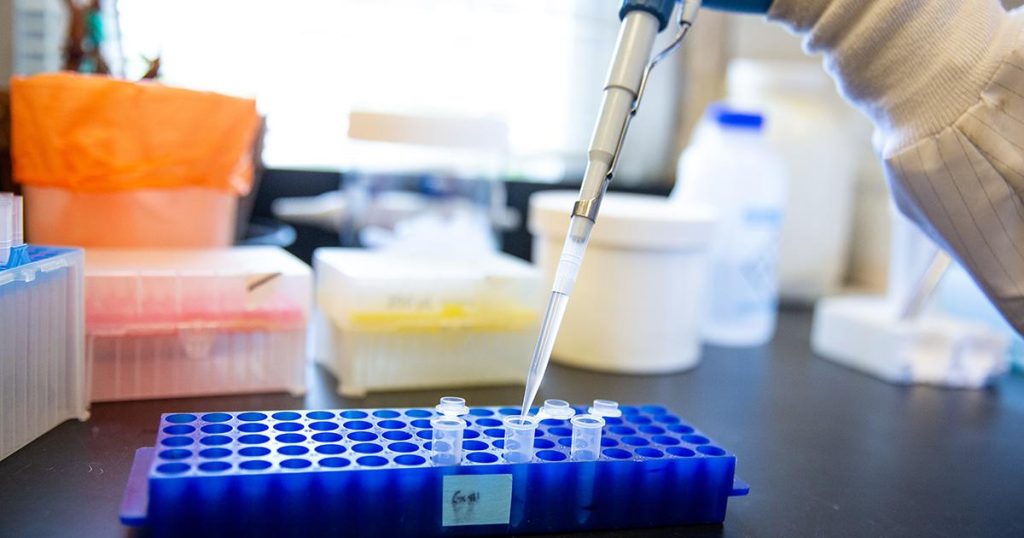
Not every freeze-dried reagent should be dissolved in plain water. Some need a kit-supplied buffer; others are brought to final reaction volume with the primer and template mixture. Using the wrong liquid can change ionic conditions, pH, or reaction chemistry.
For pH-based colorimetric LAMP, sample buffers deserve particular attention. Strongly buffered solutions can interfere with the color shift even when amplification occurs. Hyasen specifically advises against Tris-containing DNA storage buffers for HYB312.
What to do: Use the diluent specified for the particular product. Where water is required, choose the recommended molecular-biology-grade or nuclease-free grade. Check the sample’s storage buffer as well as the water used to prepare the reaction.
2. Adding the Wrong Volume
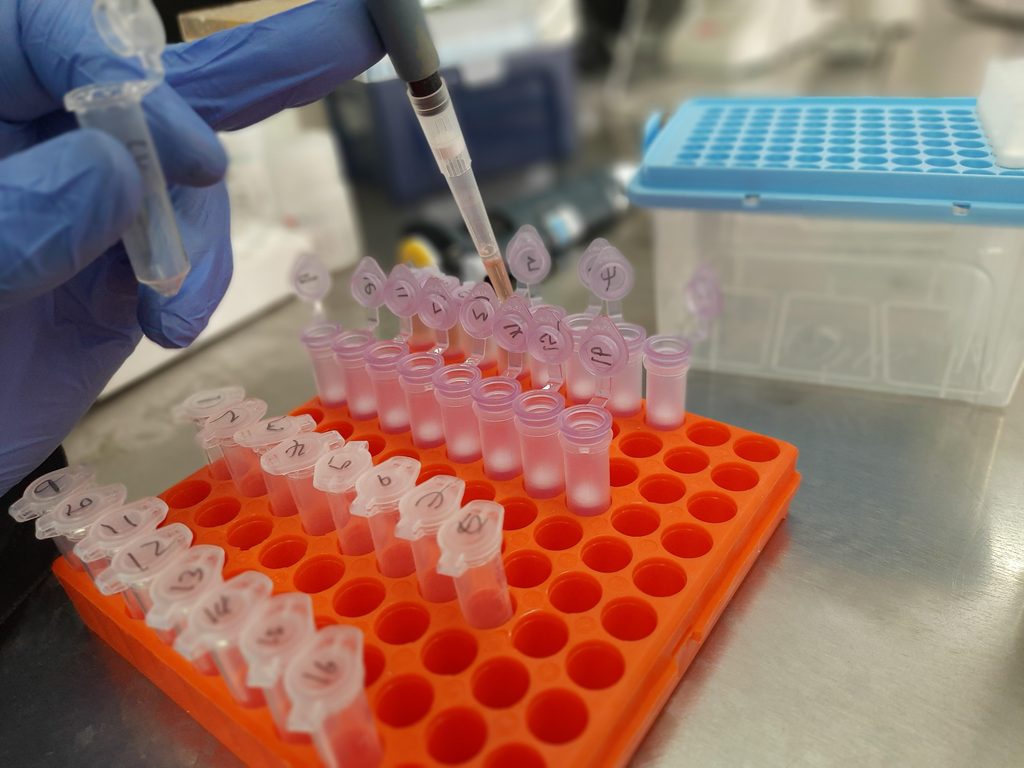
Too much liquid can dilute reaction components. Too little can make some components more concentrated than intended. Neither error guarantees that Cq will shift in a particular direction: the outcome depends on the formulation, template, and assay conditions.
A common source of confusion is whether the instructions specify a reconstitution volume for preparing a stock or a final reaction volume that includes sample and primers. Those are not interchangeable.
What to do: Check the complete reaction setup and confirm which additions count toward the final volume. Use a calibrated pipette and record any departures from the specified procedure.
3. Not Fully Dissolving the Bead or Powder
An illustration showing the state of a lyophilized amplification reagent after it has been reconstituted and fully dissolved.
A dry bead may soften or disperse before its contents have fully dissolved. If material sticks to the tube wall or remains at the bottom, the reaction mixture may be uneven. That can become a source of variation when you dispense the same mix into several wells.
What to do: Follow the product’s mixing instructions and inspect the tube before proceeding. Some formulations tolerate brief vortexing; others call for gentle mixing. Avoid applying one mixing technique to every enzyme or master mix.
4. Skipping a Required Wait or Mixing Step
Some products specify a short hold or additional mixing step after liquid is added. Others are designed to be used as soon as they have dissolved. There is no universal equilibration time for freeze-dried reagents.
What to do: If the instructions specify a wait, follow it. If they do not, don’t introduce an arbitrary hold period and assume it will improve results. During method development, establish whether any hold time affects assay performance and document the acceptable conditions.
5. Reconstituting at the Wrong Temperature
Temperature can influence dissolution, reaction-component stability, and the time a prepared mix can remain on the bench. A temperature that is suitable for one formulation may not be appropriate for another.
What to do: Follow the stated handling temperature for the reagent and its diluent. Avoid exposing the prepared mixture to unnecessary heat or leaving it out longer than the validated procedure allows.
6. Mishandling the Reagent After Reconstitution
The storage claim for a dry product does not automatically apply after water has been added. Depending on the formulation, the prepared mix may have a limited in-use period or different storage requirements. Repeated freezing and thawing can also be a concern for some enzyme mixtures, but the effect is product-specific.
What to do: Check the stated post-reconstitution hold time, storage conditions, and whether reuse or aliquoting is permitted. Label prepared reagents clearly, and don’t assume a dry product’s expiration date applies to a reconstituted mixture.
7. Introducing Pipetting or Contamination Errors
Even a correctly reconstituted reagent can give poor results if volumes vary from well to well, bubbles interfere with liquid handling, or material carries over between samples. Amplification in a no-template control (NTC) should prompt a contamination or nonspecific-amplification investigation—not a conclusion that the reagent was too concentrated.
What to do: Use calibrated pipettes, change tips as appropriate, separate pre- and post-amplification work areas, and include the controls required by the method. Mix the prepared solution again only when the protocol calls for it.
How Can You Tell Whether Reconstitution Caused the Problem?
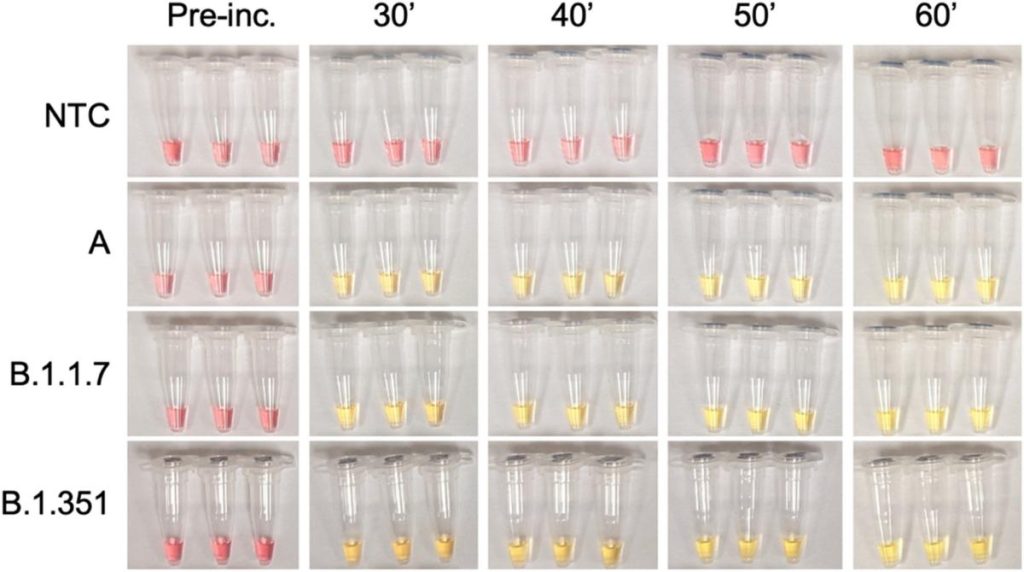
Start with the controls. Compare a freshly prepared reagent with an appropriate reference under the same assay conditions. If only one sample fails, look at the sample and template before concluding that an entire batch of beads is defective.
| What you observe | Possible explanations | What to check first |
| qPCR Cq values are later than expected | Incorrect reaction volume, compromised reagents, inhibition, or lower template input | Pipetting records, template input, positive control, reference mix |
| qPCR replicates vary widely | Uneven mixing, dispensing variation, bubbles, or sample heterogeneity | Tube contents, pipette performance, replicate setup |
| No qPCR amplification in the positive control | Missing component, incorrect setup, inhibition, or loss of reagent activity | Reaction checklist, control material, diluent and lot history |
| NTC amplifies | Carryover contamination or nonspecific amplification | Clean workflow, fresh tips, controls and assay specificity |
| Colorimetric LAMP result looks unusual | Incompatible sample buffer, incorrect endpoint, reagent/setup issue, or amplification failure | Sample pH/buffer, incubation conditions, positive and NTC reactions |
| Fluorescent LAMP turns positive later | Input variation, reaction inhibition, setup or mixing differences | Reference reaction, sample input, timing and method settings |
An isolated Cq shift is not proof of a reconstitution problem. Evaluate the size and repeatability of the change against your assay’s established performance criteria. The updated MIQE 2.0 guidance is a useful reference for consistent qPCR setup, analysis, and reporting.
Freeze-Dried vs. Liquid Reagents: What Changes in Handling?
The extra setup step is the main practical difference. Freeze-dried formats can reduce liquid handling during manufacturing or kit assembly, but the user may still need to restore the reaction mixture to a defined volume. Neither format is automatically more stable or more accurate in every application.
| Handling consideration | Freeze-dried format | Liquid format |
| Preparation | Requires a specified reconstitution or reaction-assembly step | Usually dispensed directly or combined with other components |
| Storage | Product-specific; some need refrigeration or freezing even when dry | Product-specific; refrigeration or freezing may be required |
| Common setup risks | Wrong diluent/volume, incomplete dissolution, handling after reconstitution | Incorrect dilution, thawing/mixing errors, repeated freeze–thaw when relevant |
| Documentation to check | Dry storage, diluent, mixing, in-use period, and acceptance criteria | Storage, mixing, thawing, in-use period, and acceptance criteria |
| Useful quality check | Functional performance after reconstitution | Functional performance under stated use conditions |
For more background on developing stable dried formulations, see why freeze-dried formats are used in molecular diagnostics.
A Practical Reconstitution Checklist
Use this checklist before running a new lot, changing operators, or troubleshooting inconsistent results:

- Read the exact product instructions. Confirm whether you’re preparing a stock solution or the complete reaction.
- Check the diluent and sample buffer. Confirm water grade, buffer compatibility, and any pH-sensitive detection chemistry.
- Confirm the required volume. Include primers, template, and any additional components where the procedure calls for them.
- Add liquid consistently. Use calibrated pipettes and avoid introducing bubbles.
- Mix as directed. Confirm that the dried material has dissolved; don’t assume vortexing is always appropriate.
- Follow specified temperature and timing conditions. Include any required wait or brief centrifugation step.
- Run the right controls. Include the assay’s positive and no-template controls, plus other controls required by its validated procedure.
- Record what changed. Document the lot, operator, diluent, preparation time, and any deviation so you can investigate trends later.
The goal is not to add more steps. It’s to make the essential steps consistent and easy to verify.
How Can Kit Developers Make Reconstitution More Reliable?
For manufacturers, reconstitution risk starts in product development, not just at the lab bench. A clear instruction sheet helps, but so does a formulation that dissolves consistently under realistic use conditions. Developers should evaluate performance after drying and reconstitution—not just the appearance of the cake or bead.
Useful questions for a supplier or development partner include:
- What is the intended final reaction format? A bead dried in the final reaction tube is handled differently from a powder reconstituted as a stock.
- Which diluents and sample matrices have been evaluated? This is especially important for pH-sensitive colorimetric LAMP.
- How is dissolution assessed? Ask for a defined, repeatable method and functional acceptance criteria where available.
- What is the in-use period after reconstitution? Confirm whether it was tested at the temperatures and handling times relevant to your workflow.
- How is batch consistency documented? Ask which functional controls and performance measures are included in lot qualification.
These questions also help distinguish different freeze-dried formats. Hyasen’s LAMP and RT-LAMP range includes colorimetric, fluorescent, and in-situ lyophilized products, each with its own intended use and handling instructions. The examples below show those formats without treating them as interchangeable with qPCR master mixes.
Hyasen Lyophilized LAMP and RT-LAMP Reagents
- LAMP Colorimetric Master Mix (Lyophilized Beads), HYB312 — bead-format LAMP chemistry for a visual red-to-yellow endpoint; listed at 2–8°C for 12 months.
- LAMP Colorimetric Master Mix (In-situ Lyophilization), HYB311 — colorimetric LAMP chemistry dried in the reaction vessel; listed at 2–8°C for 12 months.
- LAMP Fluorescent Master Mix (Lyophilized Beads), HYB315 — bead-format fluorescent LAMP reagent for instrument-based monitoring; listed at 2–8°C for 12 months.
- RT-LAMP Colorimetric Master Mix (Lyophilized Beads), HYB412 — freeze-dried RT-LAMP format with colorimetric endpoint detection; listed at 2–8°C for 12 months.
Products in the same family can use different assay chemistries, readouts, and reaction setup instructions. Check the current manual before transferring a procedure from one product to another. For formulation development, scale-up, and related services, see Hyasen’s molecular diagnostics solutions.
Frequently Asked Questions
How do I reconstitute a freeze-dried amplification bead?
Use the diluent and final reaction volume specified in the product instructions. Add any primers, template, or other components in the order required, mix as directed, and verify that the dried material has dissolved before use.
Can the wrong water cause a Cq shift?
Yes, an incompatible diluent can change reaction conditions and contribute to a Cq shift. But a Cq change alone cannot identify the cause. Compare controls and check sample input, mixing, reaction volume, and instrument settings.
Do I always need to let the reagent sit after adding water?
No. Some formulations specify a wait or additional mixing step, while others can be used after they dissolve. Follow the validated instructions rather than adopting a universal equilibration time.
Can I vortex lyophilized enzyme or master-mix reagents?
Only if the product instructions permit it. Mixing requirements depend on the enzyme and formulation; gentle pipetting or inversion may be preferred for some products.
What if my colorimetric LAMP reaction changes color unexpectedly?
Check the positive and no-template controls, the specified endpoint, and the sample buffer. In pH-sensitive LAMP, a strongly buffered sample can interfere with color interpretation even when amplification and color change do not align as expected.
Can I reuse a master mix after reconstitution?
Only if its product instructions provide compatible storage and in-use conditions. The shelf life of the dry reagent should not be applied automatically to the prepared solution.
Does a LAMP master mix have a Cq value?
Not necessarily. Standard colorimetric LAMP is read at an endpoint and does not produce a qPCR Cq value. Real-time fluorescent LAMP may report time to positivity or another instrument-specific metric.
What should a kit manufacturer validate before launching a dried format?
At minimum, the intended diluent, reaction volume, mixing and hold conditions, assay performance after reconstitution, and relevant storage and transport conditions. Acceptance criteria should reflect the particular assay and its intended use.
Conclusion
Getting reliable results from lyophilized reagents starts with a repeatable setup: the specified diluent and volume, complete dissolution, appropriate handling, and the right controls. If a result changes, check those steps before assuming the freeze-dried formulation has failed. And evaluate the outcome using the correct method—Cq for qPCR, an appropriate real-time measure for fluorescent LAMP, or the defined endpoint for colorimetric LAMP.
Developing a freeze-dried assay or sourcing amplification reagents? Contact Hyasen to discuss samples, technical specifications, bulk supply, OEM/ODM, and customized formulation or lyophilization support.
References
- Bustin, S. A., et al. (2025). MIQE 2.0: Revision of the Minimum Information for Publication of Quantitative Real-Time PCR Experiments Guidelines. Clinical Chemistry, 71(6), 634–651.
- New England Biolabs. What buffer should I use for target samples and primers in a colorimetric LAMP reaction? — background on buffer-dependent colorimetric readout; consult the Hyasen manual for HYB312-specific guidance.